 Dehler
Dehler
Dehler
In the rapidly evolving landscape of global energy, the Molded Case Circuit Breaker (MCCB) stands as the cornerstone of electrical safety and operational continuity. As a leading manufacturer and supplier, Dehler Technology Co., Ltd. recognizes that the demand for high-performance circuit breakers is no longer just about basic protection—it’s about intelligent power management, energy efficiency, and seamless integration into smart grids.
This whitepaper explores the technical nuances, market trends, and manufacturing excellence that define high-quality Molded Case Circuit Breakers. From their role in protecting sensitive industrial equipment to their application in large-scale renewable energy projects, MCCBs are the silent guardians of our modern infrastructure.
Designed to handle currents from 15A up to 2500A, providing robust thermal and magnetic protection against overloads and short circuits.
Utilizing high-grade thermo-set plastics and silver alloy contacts to ensure durability under high-stress conditions.
Meeting IEC 60947-2, UL 489, and CE standards to ensure safe operation across different regional electrical grids.

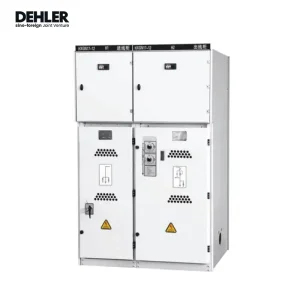
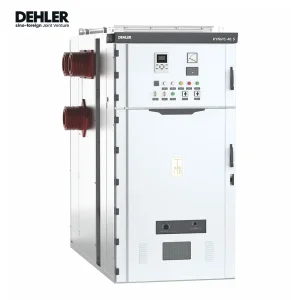
Dehler Technology Co., Ltd., established in 2016, is a premier technology enterprise specializing in the R&D, production, and service of high and low voltage power equipment. Located in the Yanpan Economic Development Zone, Yueqing City—China's electrical capital—we have grown into a multi-divisional leader in the industry.
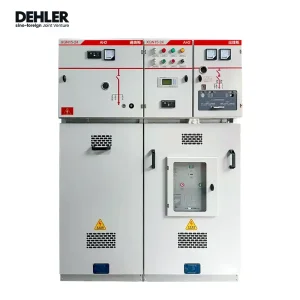
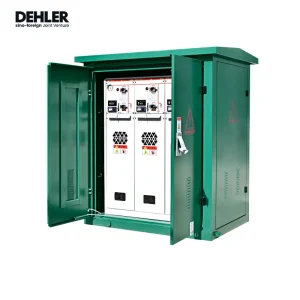
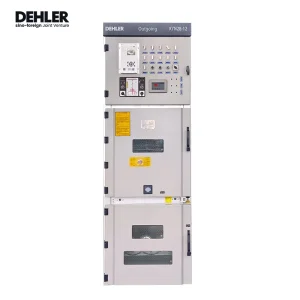
Our specialization spans from High & Low Voltage Switchgear to Prefabricated Substations and Molded Case Circuit Breakers. We serve critical sectors including power generation, railway electrification, steel mills, wind power, and petroleum. Our philosophy—"survival through quality, development through technology"—drives our commitment to delivering intelligent, energy-saving, and environmentally friendly power solutions.
The industry is shifting from traditional thermal-magnetic units to Electronic Trip Units. ETUs offer greater precision, adjustable settings, and digital communication capabilities, essential for data centers and hospitals where uptime is critical.
Smart MCCBs are now equipped with communication protocols like Modbus and Ethernet. This allows for remote monitoring, predictive maintenance, and real-time power quality analysis, reducing TCO (Total Cost of Ownership).
With the rise of Solar PV and EV charging, there is a massive surge in demand for DC MCCBs capable of handling high voltages (up to 1500V DC) and protecting against bidirectional current flows.
| Buyer Requirement | Global Standard Preference | Key Procurement Factor |
|---|---|---|
| Infrastructure (Roads/Bridges) | IEC 60947-2 | Longevity & Weather Resistance |
| Data Centers | UL 489 / CE | Selectivity & Fast Tripping Time |
| Renewable Energy Plants | DC Specialized Standards | Voltage Rating & Heat Dissipation |
| Mining & Heavy Industry | High Breaking Capacity (kA) | Arc Flash Mitigation |
As a senior Growth Director in the electrical sector, we understand that a circuit breaker is part of a larger ecosystem. Dehler provides holistic solutions that integrate MCCBs into complex architectures:
Customized protection for motor control centers (MCC), ensuring that startup surges don't trigger nuisance trips while protecting against genuine faults.
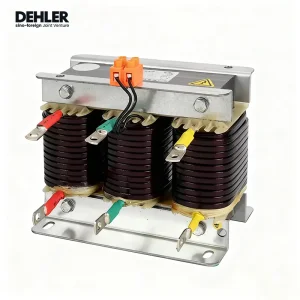
Integrating MCCBs with harmonic control and capacitor switches to stabilize voltage and improve the power factor of industrial grids.
Specially treated MCCBs with anti-corrosive coatings and vibration resistance for shipbuilding and offshore oil platforms.
2024-2025: Expansion of Solid-State Circuit Breaker (SSCB) prototypes, offering near-zero arc protection and microsecond response times.
2026-2027: AI-driven "Health Score" for MCCBs, where built-in sensors predict contact wear and mechanical failure months in advance.
2028 Beyond: Fully decentralized protection schemes where MCCBs communicate peer-to-peer to isolate faults without centralized controllers.
Navigating international regulations is a core competency at Dehler. We provide localized documentation, technical support in multiple languages, and products tailored to regional grid configurations (50Hz vs 60Hz). Our quality management system is standardized to ensure that whether you are in Southeast Asia, Europe, or Africa, the product performance remains consistent.
Countries Served
100%Factory Testing Rate
24/7Technical Assistance
Our MCCBs offer a range of breaking capacities from 25kA to 150kA (Icu at 400V), making them suitable for everything from light commercial use to heavy industrial applications.
Yes, we manufacture a specific series of DC Molded Case Circuit Breakers designed for voltages up to 1500V DC, optimized for PV inverter protection.
Through 8+ years of dedicated R&D, ISO-certified facilities, partnerships with global electrical giants, and a transparent testing process that provides full traceability for every component.
MCCBs are used for higher current ratings (up to 2500A) and have adjustable trip settings, whereas MCBs are typically used for low-current domestic applications (below 125A) with fixed settings.