Dehler Dehler

High-Quality DLQ5 Dual Power Automatic Transfer Switch - China Suppliers & Factory for Reliable Power Backup Solutions Manufacturers, Suppliers

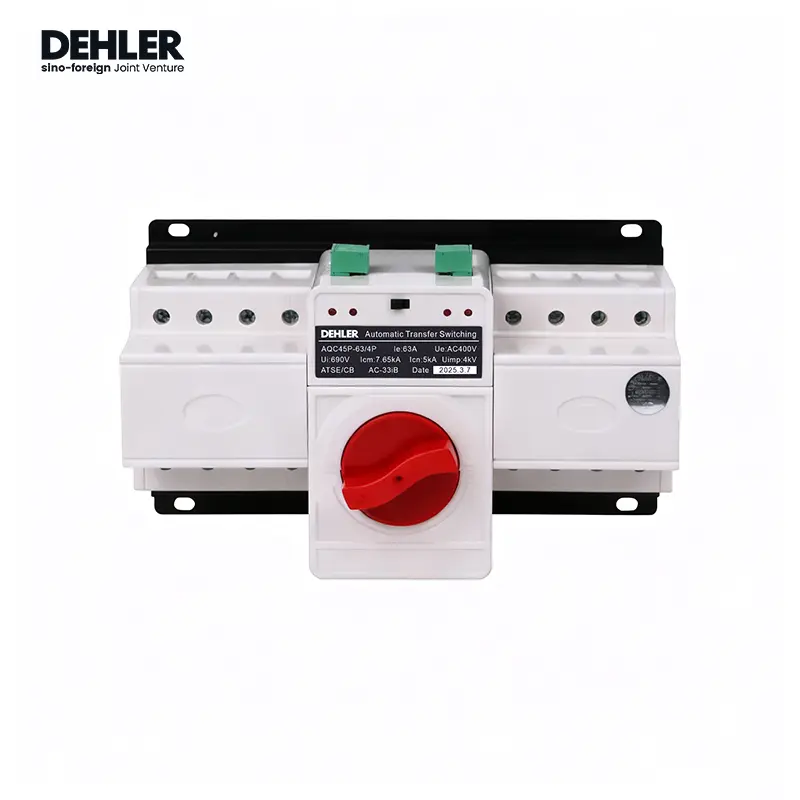
An Automatic Transfer Switch (ATS) is a crucial electrical device designed to seamlessly transfer loads to a backup power source when the primary power supply experiences an interruption. This innovative technology ensures quick power restoration during outages, making it essential for facilities that require high power continuity, such as hospitals, airports, data centers, and high-rise buildings. Our ATS systems incorporate advanced features like voltage detection, electrical and mechanical interlocking mechanisms, and robust protection against overvoltage, undervoltage, and phase loss. As a leading factory and supplier in China, we prioritize quality and reliability, ensuring that your critical power systems are always safeguarded and operational. Choose us for dependable ATS solutions tailored to meet your specific needs

Product Description

Operating Principle
  1. 1 Power Supply Detection: The switch continuously monitors the voltage of the main power supply (common power source).
  2. 2 Fault Diagnosis: When a fault is detected (e.g., power outage, undervoltage, phase loss), the switch automatically disconnects from the main supply.
  3. 3 Switching to Backup Power: It quickly connects to a backup source (e.g., generator or another grid), maintaining the load's power.
  4. 4 Recovery Operation: When the main supply returns to normal, the switch transfers the load back and disconnects the backup power.
Main Functions and Features
  • High degree of automation: Automatic switching function requires no manual intervention.
  • Safe and reliable: Mechanical and electrical interlocking prevents simultaneous closing of two breakers.
  • Fault protection: Automatic switching for overvoltage, undervoltage, and phase loss.
  • Intelligent control: Supports remote control, telemetry, and signaling ("four remote" functions).
  • Fast switching: High-speed transfer (over 100ms) minimizes equipment downtime.
  • Clear indication: Features clear position indicators and padlock functions for safety isolation.
Application Scenarios
🏗️ Construction High-rise buildings, hospitals, fire protection systems, and commercial complexes.
✈️ Transportation Airports, railway stations, and busy dock facilities.
🏭 Industrial Chemical, metallurgy, and textile production lines requiring high continuity.
💾 Data Centers Uninterrupted power for critical IT infrastructure and servers.
Product Display
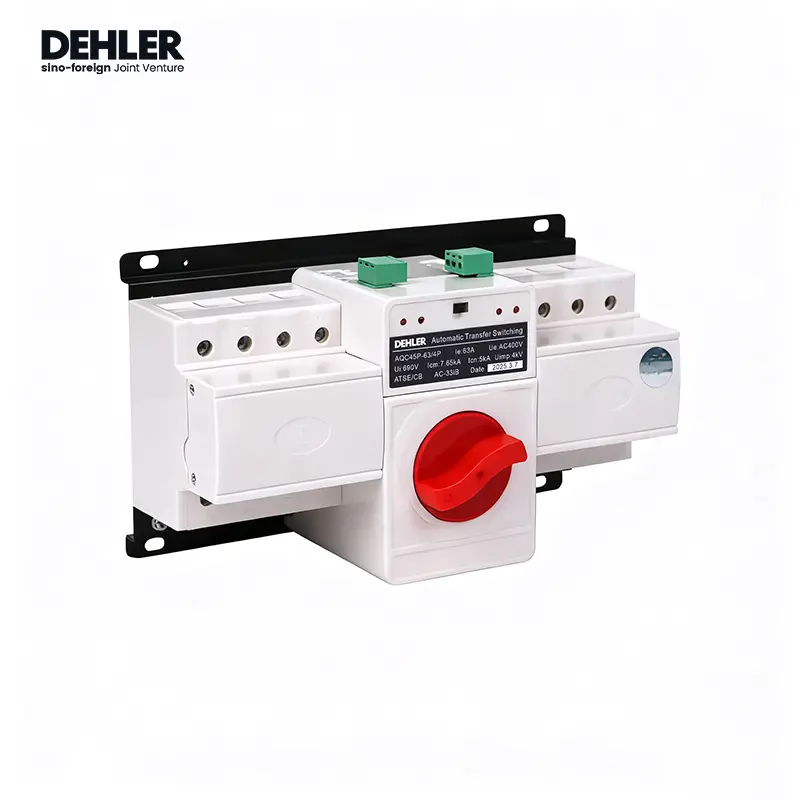
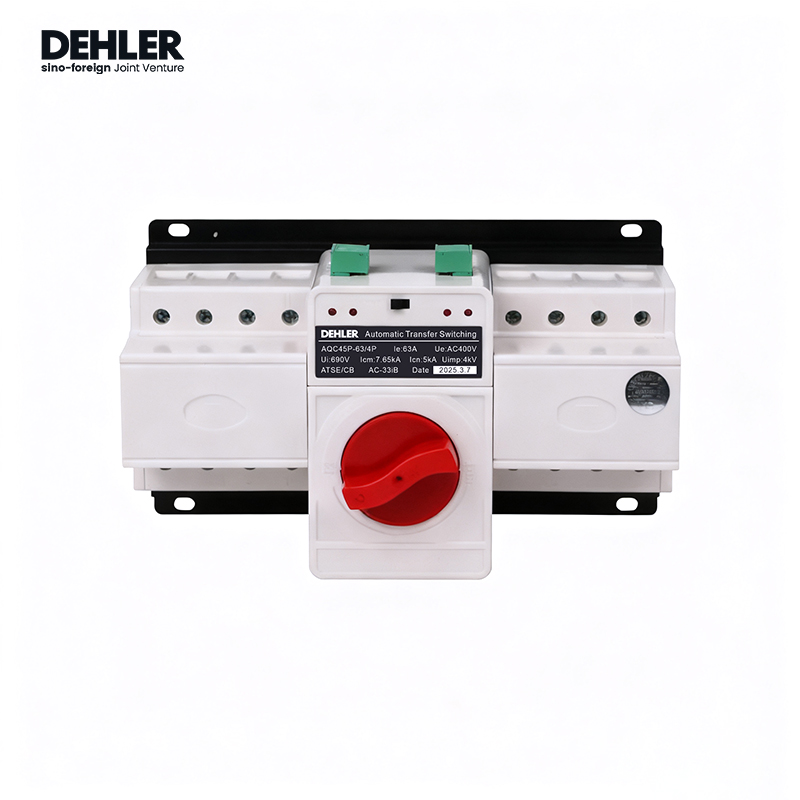
Automatic Transfer Switch Front View
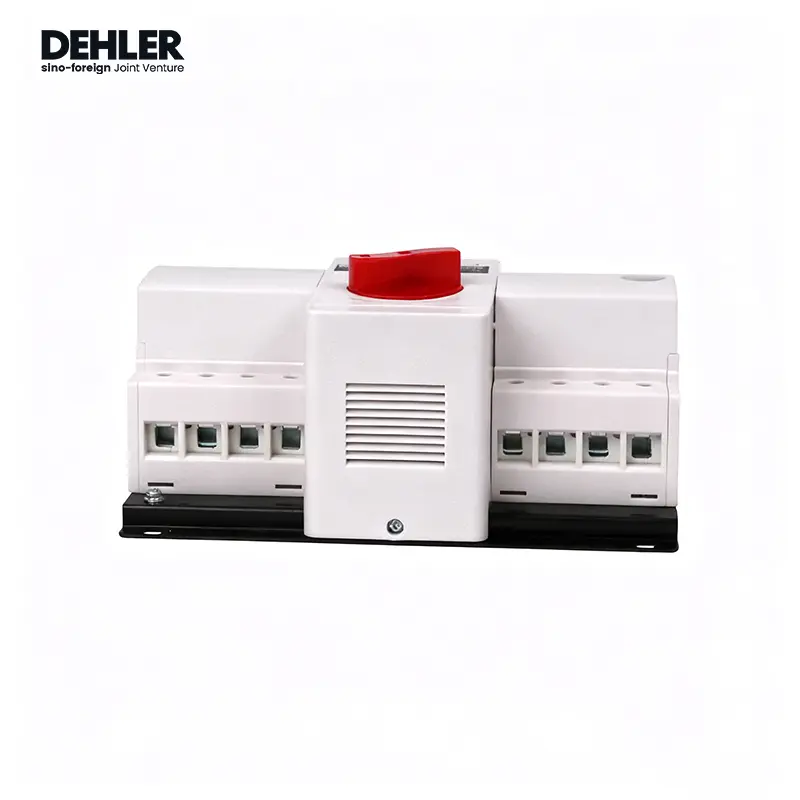
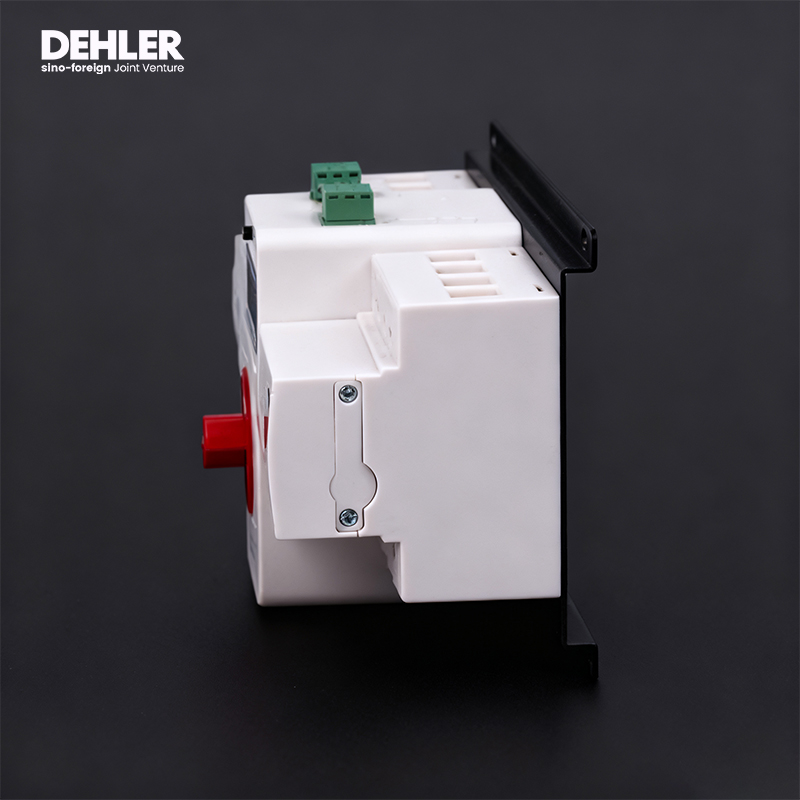
Automatic Transfer Switch Side View
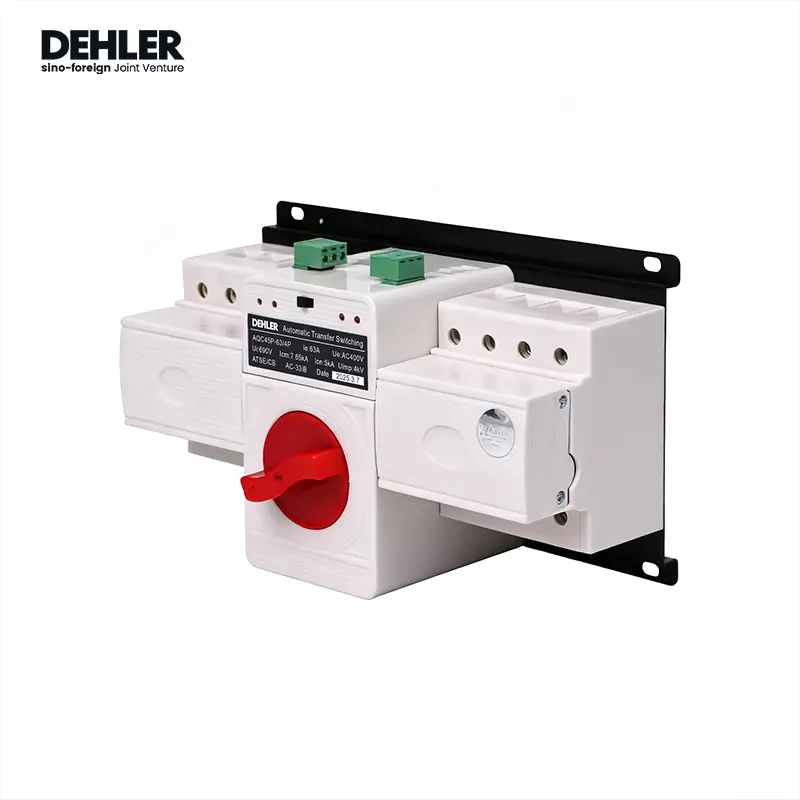
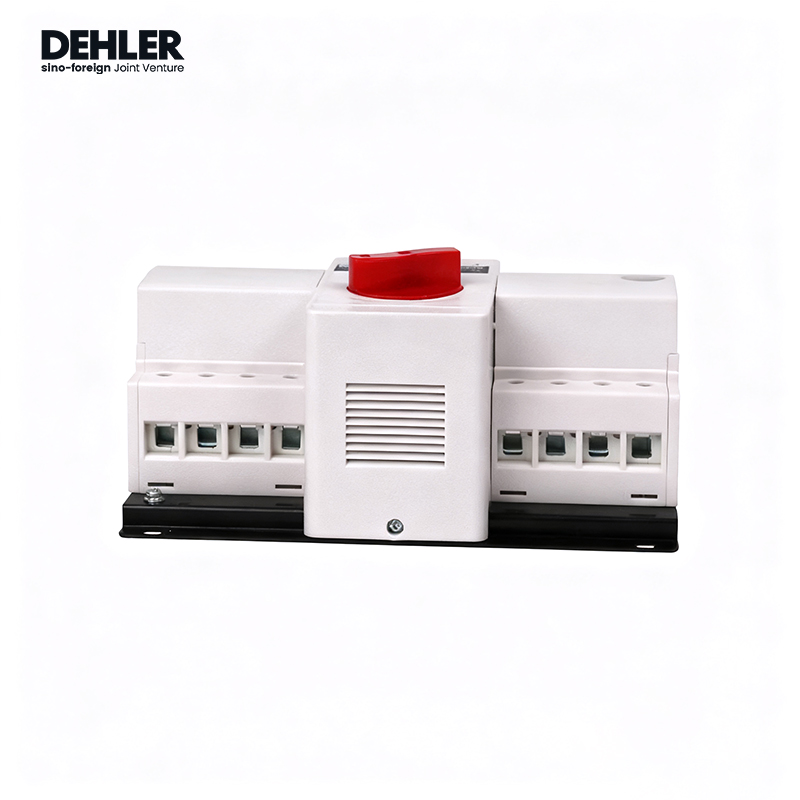
ATS Internal Components
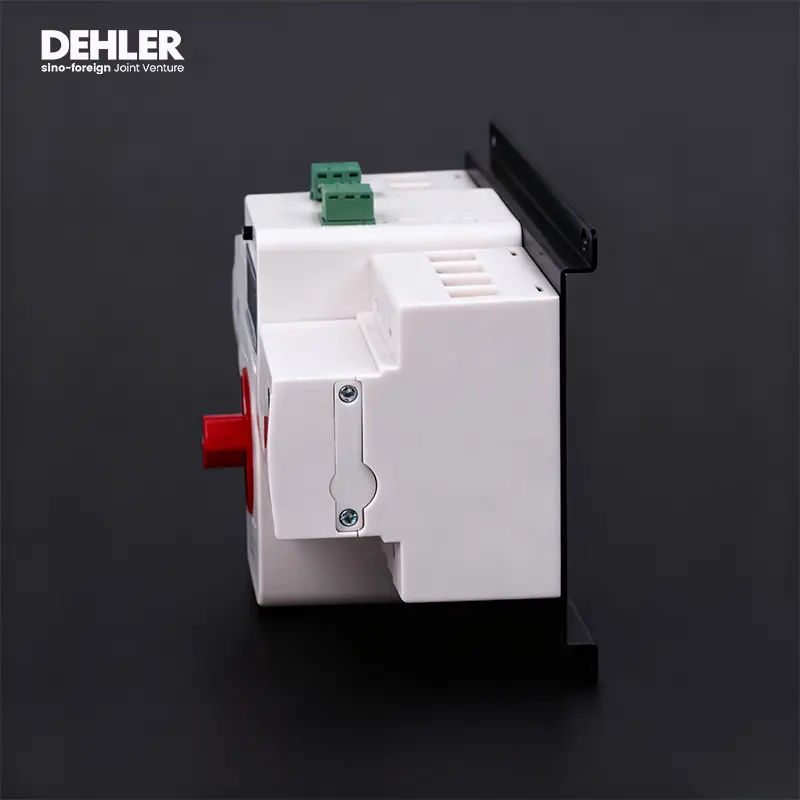
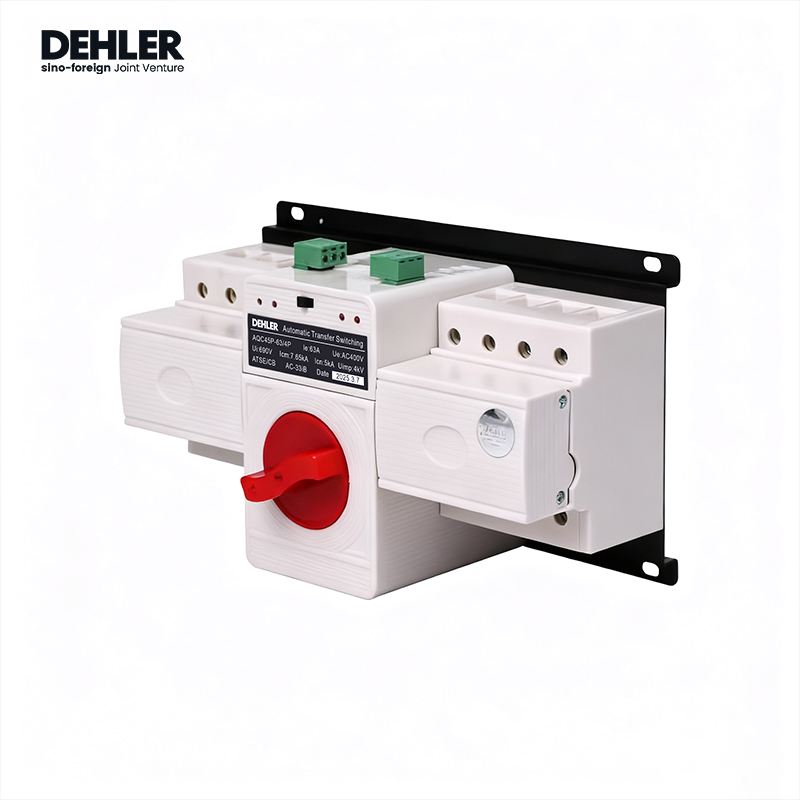
ATS Installation Detail
Frequently Asked Questions
Q: What is an Automatic Transfer Switch (ATS) and how does it work?
An ATS is a device that automatically switches a load between two power sources—typically a main utility supply and a backup generator. It monitors voltage levels and transfers power immediately upon detecting a fault to ensure continuity.
Q: How fast does the ATS switch between power sources?
Switching speed varies by model; mechanical-structure units typically transfer in over 100 milliseconds. This rapid transition is designed to minimize downtime for most industrial and commercial equipment.
Q: What faults can the ATS detect and protect against?
The ATS protects against complete power outages, undervoltage, overvoltage, and phase loss. It initiates a transfer whenever the power quality falls outside of safe operating parameters.
Q: Is it safe to use an ATS—can two power sources be connected at once?
Safety is a priority; ATS units feature mechanical and electrical interlocking mechanisms that physically prevent both power sources from being connected simultaneously, eliminating short-circuit risks.
Q: Does the ATS support remote monitoring?
Yes, many units support "four remote" functions: remote control, monitoring, telemetry, and signaling, allowing for centralized management in data centers or unmanned stations.
Q: Where is an ATS most commonly used?
They are critical in hospitals, high-rise buildings, data centers, airports, and industrial plants where any power interruption could lead to safety issues or significant financial loss.

Related Products