 Dehler
Dehler
Dehler
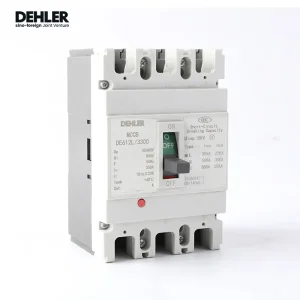
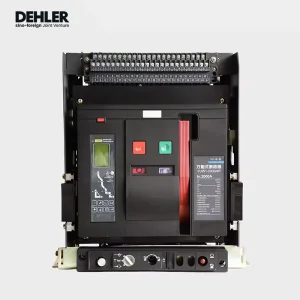
In the contemporary landscape of industrial electrical engineering, the Shunt Trip Molded Case Circuit Breaker (MCCB) represents a critical bridge between passive overcurrent protection and active system management. Unlike standard circuit breakers that rely solely on thermal or magnetic trip elements to detect local faults, a Shunt Trip mechanism allows for the integration of external control signals. This capability is paramount in modern "Smart Grids" and automated industrial facilities where emergency shutdowns must be triggered by fire alarm systems, remote sensors, or PLC (Programmable Logic Controller) commands.
As a leading Shunt Trip MCCB manufacturer, we recognize that the demand for "Information Gain" in procurement is no longer just about voltage and current ratings; it is about system interoperability, breaking capacity reliability (Icu vs. Ics), and the longevity of the auxiliary components under harsh environmental conditions.
Global enterprises require products that satisfy both IEC 60947-2 and UL 489 standards. Our Shunt Trip MCCBs are designed for multi-regional compliance, ensuring seamless integration into European, Asian, and American infrastructure.
Information Gain Analysis: We focus on maximizing the Ics (Service Breaking Capacity) to 100% of Icu (Ultimate Breaking Capacity), ensuring that the breaker remains functional after clearing a fault, reducing downtime for critical operations.
Total Cost of Ownership (TCO) is optimized through the use of high-grade silver alloy contacts and modular shunt trip accessories, allowing for easy field upgrades without replacing the entire MCCB unit.
In PV systems, remote tripping is essential for fire safety. Our Shunt Trip MCCBs integrate with solar inverter rapid-shutdown protocols to isolate DC/AC circuits instantly during thermal runaway or grid instability.
For mission-critical data centers, the shunt trip accessory allows for "EPO" (Emergency Power Off) integration. Our breakers ensure high selectivity to prevent nuisance tripping while guaranteeing protection during localized faults.
Operating in high-dust and high-vibration environments like coal mines or steel mills, our Shunt Trip MCCBs utilize reinforced housings and anti-corrosion internal coatings for 24/7 reliability.
The next decade of circuit protection is shifting toward Digital Twins and IoT Integration. Our R&D department is currently piloting "Smart Shunt Trips" that not only execute a trip command but also communicate the reason for the trip back to the cloud. This includes pre-trip diagnostic data, contact erosion levels, and temperature monitoring at the terminals.
As we transition into Industry 4.0, the role of the MCCB manufacturer evolves from a hardware provider to a data-integrity partner. Our roadmap includes the integration of electronic trip units (ETU) with built-in shunt trip functionality, eliminating the need for separate auxiliary wiring and reducing the footprint in compact switchboards.

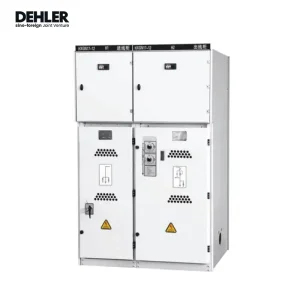
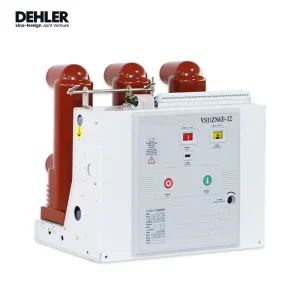
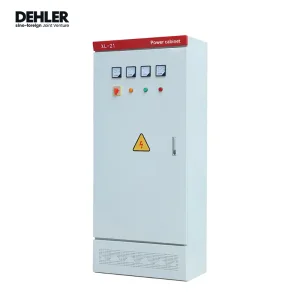
Established in 2016 and headquartered in Yueqing City—China's electrical capital—Dehler Technology Co., Ltd. is a premier technology enterprise. We integrate R&D, production, sales, and service specializing in high and low voltage power equipment. Our production encompasses switchgear, prefabricated substations, and a robust line of circuit breakers.
Our expertise spans across power generation, railway electrification, steel manufacturing, and renewable sectors. We adhere to the philosophy of "Survival through quality, development through technology," ensuring every Shunt Trip MCCB leaving our factory meets the most rigorous international benchmarks.
Our manufacturing processes are ISO 9001:2015 certified. Every Shunt Trip MCCB undergoes routine dielectric tests, trip timing tests, and insulation resistance checks before export.
We provide localized technical dossiers, including 3D CAD models, wiring diagrams for shunt trip integration, and comprehensive maintenance schedules to ensure your facility remains compliant.
A shunt trip is an optional accessory that allows the circuit breaker to be tripped electrically from a remote location. It is commonly used for emergency power-off (EPO) and fire safety systems.
The coil voltage must match your control circuit voltage (e.g., 24V DC, 110V AC, or 230V AC). Using the incorrect voltage can result in either a failure to trip or a burnt-out coil.
Yes, our Shunt Trip MCCBs are designed with a modular internal architecture, allowing authorized technicians to install or replace shunt trip units, auxiliary contacts, and alarm switches easily.
Yes. A shunt trip trips the breaker when power is applied to the coil. An under-voltage release trips the breaker when power is lost or drops below a certain threshold.
Annual testing of the trip mechanism is recommended. This involves sending a signal from the control system to ensure the breaker responds within its specified time (usually <20ms).
Our latest models can be equipped with communication modules (Modbus/RS485) that work alongside the shunt trip to provide real-time status updates to your BMS or SCADA system.
We collaborate with hundreds of agents and manufacturers worldwide to deliver reliable electrical infrastructure.




Contact our engineering team today for a technical consultation or a bulk procurement quote.