
Dehler Dehler

Why Choose an Electrical Cable Box for Global Sourcing?

Time:2026-09-22 Author:Aria
0%

Global sourcing is reshaping how manufacturers protect, organize, and transport electrical connections. An Electrical Cable Box offers a practical response to this pressure. It can separate cable types, reduce bending damage, and simplify inspection before shipment. The detail matters. A crushed carton or loose connector can delay an entire installation.

The International Energy Agency reported in Electricity 2024 that global electricity demand is expected to grow strongly through 2026, driven by industry, cooling, data centres, and electrification. This expansion increases demand for dependable cable infrastructure. MarketsandMarkets also identifies cable management as a growing market, supported by construction, renewable energy, and industrial automation. However, market estimates use different definitions. They should not be treated as exact forecasts.

Quality remains the difficult part.

Christopher Guerin, CEO of Nexans, has repeatedly emphasized the importance of electrification and reliable infrastructure. His central message can be expressed clearly: “Electrification is the key to a more sustainable future.” For global buyers, that future depends on small components as well as major cable systems.

Choosing an Electrical Cable Box can improve packaging consistency across suppliers and regions. Buyers can specify flame performance, material strength, moisture resistance, labeling, and dimensional tolerances. A sealed box with visible identification is easier to audit in a busy warehouse. It also supports safer handling and more predictable installation work.

Still, one box cannot solve every sourcing risk. Supplier verification, sample testing, international shipping conditions, and local technical requirements remain essential. The strongest sourcing decision is not always the cheapest one. Sometimes, the extra packaging cost prevents far greater replacement expenses later.
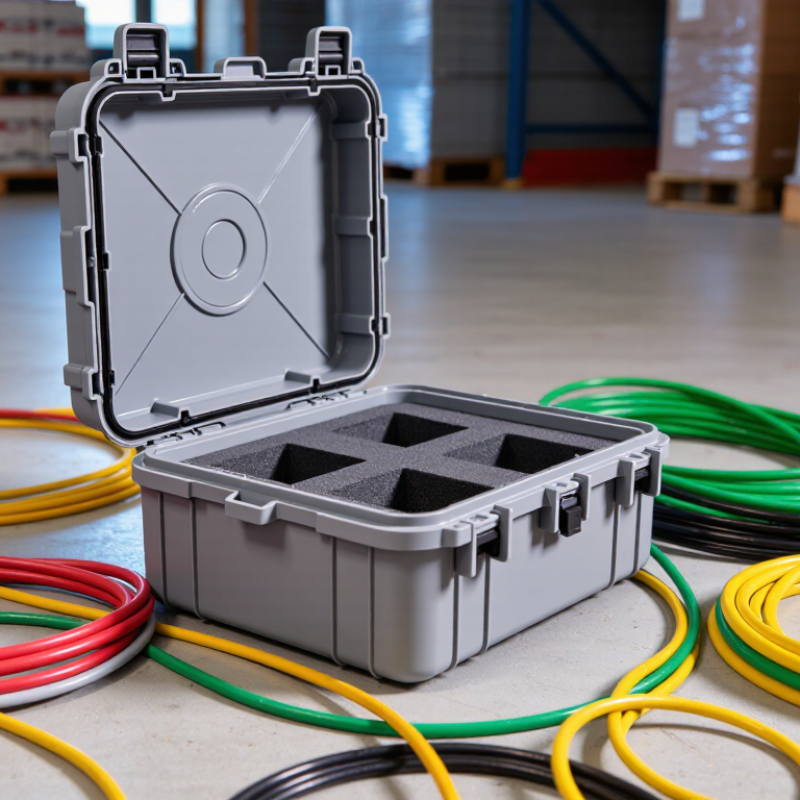
Why Choose an Electrical Cable Box for Global Sourcing?

What Is an Electrical Cable Box and What Does It Do?

An electrical cable box is a protective enclosure for joining, routing, or terminating electrical cables. It keeps connections organized and shields them from dust, moisture, impact, and accidental contact. Inside, terminals, connectors, cable glands, and grounding points create a controlled connection area.

In a factory, installers may place one above a machine or beside a control panel. Cables enter through sealed openings, while internal terminals keep each circuit identifiable. This arrangement makes inspection and maintenance faster. It also reduces loose wires, exposed conductors, and unnecessary strain on cable ends.

Protection levels matter. A supplier should state the enclosure material, ingress rating, temperature range, voltage suitability, and flame behavior clearly. Stainless steel may suit corrosive areas, while reinforced plastic can reduce weight. The correct cable gland is equally important. A strong box with a poor seal still allows water inside.

Global sourcing requires careful document checks. Product drawings, test reports, packing details, and applicable electrical standards should match the actual shipment. Requirements can differ between markets. A box approved for one installation may need additional verification elsewhere. The easy mistake is choosing by appearance. It can look durable and still have weak hinges or inaccurate entry holes. Cost matters, but replacing a poorly fitted box costs more in labor and downtime.ಿಕ್ಷ

Why Choose an Electrical Cable Box for Global Sourcing?

What Is an Electrical Cable Box and What Does It Do?

An electrical cable box is an enclosure used to organize, terminate, protect, and route electrical cables and connections. Its enclosure rating helps buyers select suitable protection against solid objects and water in different installation environments.

The chart uses the two digits of IEC 60529 IP codes. The first digit indicates protection against solid objects and dust, while the second digit indicates protection against water. Higher digits generally represent a higher standardized protection level, although the exact suitability depends on the installation conditions and the enclosure manufacturer’s test rating.

Reference: IEC 60529 ingress protection classification.

Which Materials and Designs Suit Different Cable Protection Needs?

Choosing the right electrical cable box starts with the environment, not the lowest unit price. The IEA’s Electricity 2024 report forecasts global electricity demand growth of 4% in 2024, followed by average annual growth of 3.3% through 2026. More installations mean more exposure to heat, moisture, dust, vibration, and accidental impact.

For indoor distribution areas, ABS or polycarbonate boxes offer low weight, good insulation, and corrosion resistance. Polycarbonate usually suits locations needing stronger impact performance and better dimensional stability.

Steel or stainless steel is more suitable for factories, outdoor cabinets, and areas requiring mechanical protection. However, metal can corrode near saltwater unless its coating and fasteners are properly selected. That detail is often missed.

Design must match the protection requirement. IEC 60529 IP ratings help specify resistance to dust and water, while impact testing should be reviewed separately. A sealed box may protect cables from rain but trap heat around high-load conductors. Ventilation, cable glands, bend radius, drainage, and grounding paths need practical review. The U.S. National Electrical Code also requires suitable enclosures for the installation environment, not simply attractive housings. Choose the environment. Details matter.

For global sourcing, request material certificates, temperature ratings, ingress-test evidence, and dimensional drawings before approving samples. A common mistake is trusting a quoted IP rating without checking the complete assembly, including the lid seal and cable entries. I would also test a small batch first. Laboratory results can look convincing, yet field conditions are rarely so tidy.

(Sources: International Energy Agency, Electricity 2024; IEC 60529; NFPA 70, National Electrical Code)

How Does a Cable Box Support International Sourcing?

When sourcing electrical cable boxes internationally, buyers need more than a low unit price. A well-specified box protects cable connections from dust, moisture, impact, and careless handling. It also gives suppliers a common reference for dimensions, materials, wall thickness, entry points, and closure methods. This reduces confusing emails across languages. In practical sourcing work, a clear drawing often prevents more defects than a long product description. Small details matter.

For cross-border purchasing, the box should match the cable type, installation environment, and local electrical requirements. Ask for material data, ingress protection evidence, temperature limits, and test records before approving samples. A sample can reveal warped covers, weak threads, or terminals with limited working space. Photos help, but they cannot replace physical inspection. Suppliers should also confirm carton strength, labeling, pallet dimensions, and spare-part availability. These details affect customs handling, warehouse storage, and field repairs.

A reliable sourcing process keeps revision history and records every approved change. It compares production samples with the signed specification, not memory. Communication should cover tolerances, cable entry seals, fastening torque, and inspection frequency. One practical weakness remains: a box passing factory tests may still feel awkward for installers wearing gloves. That issue is easy to miss. Requesting an installation trial can expose it early. Climate, transport routes, and site habits also vary between markets.

What Quality, Safety, and Compliance Factors Should Buyers Check?

Why Choose an Electrical Cable Box for Global Sourcing?

What Quality, Safety, and Compliance Factors Should Buyers Check?

A reliable electrical cable box protects conductors from moisture, impact, heat, and accidental contact. Buyers should verify the enclosure material, wall thickness, flame resistance, insulation performance, and cable-entry design. IEC 60670 standards address boxes and enclosures for electrical accessories, while IEC 60529 defines IP protection ratings. An IP rating must match the installation environment, not merely appear on a datasheet. Dusty factories and outdoor sites need different protection levels. Looks deceive.

Request test reports for dielectric strength, insulation resistance, impact resistance, and temperature performance. Reports should identify the exact model, test method, laboratory, and production sample. A certificate alone is not proof. The OECD and EUIPO estimated that counterfeit and pirated goods represented 2.5% of global trade in 2019, worth about 464 billion US dollars. That finding makes batch traceability, component records, and supplier audits commercially important.

Buyers should also check RoHS and REACH declarations where applicable, plus destination-market requirements. Confirm whether terminals, glands, seals, and fasteners are included or sourced separately. Small mismatches can create heat, leakage, or installation failures. Factory inspections should review incoming materials, assembly torque, sealing surfaces, and final sampling records. The process may still contain gaps. A thoughtful buyer records corrective actions and tests again before approving repeat orders. Traceability matters.

Why Choose an Electrical Cable Box for Global Sourcing? - What Quality, Safety, and Compliance Factors Should Buyers Check?

Quality, Safety, or Compliance Factor Why It Matters for Global Sourcing What Buyers Should Check Relevant Standard or Benchmark Recommended Evidence
Application and Product Scope A cable box may be used as a junction enclosure, cable-entry enclosure, terminal box, or protective housing. The applicable requirements depend on its intended use and installation environment. Confirm indoor or outdoor use, fixed or portable installation, cable quantity, cable diameters, terminal configuration, mounting method, and required environmental protection. Product requirements should be defined before selecting the applicable enclosure and installation standards. Approved product specification, dimensional drawing, installation instructions, and application-risk assessment.
Ingress Protection Dust and water ingress can cause insulation deterioration, corrosion, short circuits, and premature failure. Select the IP rating according to the installation location. Confirm that the rating applies to the complete assembled box, including the cover, gasket, cable glands, plugs, and mounting interfaces. IEC 60529. IP54 provides dust-limited protection and protection against water splashes; IP65 is dust-tight and protected against water jets; IP66 is dust-tight and protected against powerful water jets. Independent or controlled test report, test configuration, sample photographs, and certificate identifying the exact model.
Mechanical Impact Resistance Impact from tools, transport, vibration, or nearby equipment can crack the enclosure and expose energized parts. Check the required impact level, test temperature, impact points, enclosure material, cover retention, and whether the rating remains valid after installation. IEC 62262 defines IK impact-protection classifications. The required IK level depends on the installation environment. IK test report, material specification, assembly drawings, and incoming visual inspection criteria.
Electrical Insulation and Protection Adequate insulation and separation reduce the risk of electric shock, short circuits, tracking, and fire. Verify insulation material, creepage and clearance requirements, terminal spacing, protection against accidental contact, and compatibility with the system voltage. IEC 60670-1 may apply to boxes and enclosures for household and similar fixed electrical installations, subject to product scope and design. Electrical safety test records, dielectric-strength test results, design calculations, and technical construction file.
Flammability and Heat Resistance Plastic enclosures should resist ignition and limit flame spread when exposed to heat, loose connections, or abnormal electrical conditions. Check the resin type, flame-retardant grade, glow-wire performance where applicable, continuous-use temperature, and whether additives affect mechanical or electrical properties. IEC 60695-2-11 covers glow-wire flammability testing of end products. IEC 60695-11-10 covers small-flame testing of plastics; the applicable method depends on the product and evaluation plan. Material datasheet, test report for the exact material grade, supplier declaration, and lot traceability.
Material and Corrosion Resistance Humidity, salt spray, chemicals, ultraviolet exposure, and temperature cycling can weaken the box or sealing system. Identify the enclosure material, gasket compound, fastener material, surface treatment, UV resistance, chemical compatibility, and intended service environment. Use an environmental test plan appropriate to the application. IEC 60068 series methods may be relevant for environmental testing. Material certificates, chemical-compatibility statement, environmental test data, and accelerated aging results where required.
Cable Glands and Strain Relief Incorrect cable entry can reduce the enclosure IP rating, damage cable insulation, or transfer pulling forces to terminals. Check cable diameter range, thread type, sealing material, clamping method, bend radius, strain-relief performance, and compatibility between the gland and enclosure wall. IEC 62444 provides requirements and tests for cable glands. The cable gland rating must be evaluated as part of the complete assembly. Gland test report, dimensional inspection record, approved cable-size chart, and assembly torque instructions.
Grounding and Bonding Metallic boxes may require protective bonding so that exposed conductive parts do not remain hazardous during an insulation fault. Confirm grounding terminals, bonding straps, protective-earth markings, contact surfaces, corrosion protection, and continuity after coating or assembly. Requirements depend on the installation system and applicable electrical installation standard. Earth-continuity test results, grounding layout, assembly procedure, and production inspection records.
Dimensional Accuracy and Assembly Fit Dimensional variation can cause sealing failure, misaligned cable entries, loose covers, and installation delays across different markets. Define tolerances for length, width, height, wall thickness, hole position, thread dimensions, cover fit, gasket compression, and mounting-hole spacing. Use a controlled engineering drawing with revision status and measurable acceptance limits. First-article inspection report, calibrated measuring equipment, approved samples, and production control plan.
Thermal and Load Performance Heat generated by terminals, conductors, or nearby equipment can accelerate aging and increase fire or insulation risks. Check ambient-temperature range, internal heat dissipation, conductor size, terminal temperature limits, derating requirements, and enclosure ventilation design. Use the applicable product standard and installation rules; do not assume a universal current rating for an enclosure. Temperature-rise test, thermal calculation, terminal datasheet, and installation derating instructions.
Regulated Substances Restricted substances can create customs, customer-acceptance, recycling, and regulatory risks in different markets. Request material declarations for plastics, metals, coatings, gaskets, cable glands, terminals, and packaging. Confirm the declaration covers all supplied components. EU RoHS Directive 2011/65/EU and applicable amendments; EU REACH Regulation (EC) No 1907/2006, including Article 33 communication duties where applicable. Supplier declaration, laboratory screening report where risk-based testing is required, and bill-of-materials traceability.
Market Access and Marking Different destination markets may require different technical documentation, markings, conformity procedures, or importer information. Identify the destination-country rules, confirm whether the product falls under a specific conformity regime, and ensure markings match the tested model and technical file. For products placed on the EU market, CE marking is a legal conformity marking where applicable; it is not a general quality mark and does not replace technical compliance assessment. Declaration of Conformity where applicable, technical file, risk assessment, product label artwork, and destination-market compliance checklist.
Production Consistency Stable manufacturing processes reduce variation in sealing, dimensions, material properties, and safety performance between shipments. Evaluate process controls for molding, machining, coating, gasket fitting, assembly torque, labeling, and final inspection. Review nonconformance and corrective-action procedures. A quality management system aligned with ISO 9001 can support consistent processes, but certification alone does not prove product compliance. Quality manual, process flow, control plan, inspection records, calibration certificates, and corrective-action reports.
Traceability and Change Control Undocumented changes to resin, gasket, tooling, fasteners, or suppliers can invalidate earlier test results or alter field performance. Require batch or lot identification, approved component lists, change-notification rules, retained samples, and records linking production lots to inspection results. Traceability requirements should be defined in the purchase specification and quality agreement. Lot codes, change-control log, supplier approval records, retained samples, and shipment inspection reports.
Packaging and International Logistics Poor packaging can cause cracked covers, damaged threads, distorted gaskets, moisture exposure, and mixed components during international transport. Check packaging strength, moisture protection, part separation, labeling, carton quantity, palletization, handling symbols, and suitability for the planned transport route. Packaging requirements should reflect product fragility, transport mode, storage conditions, and destination-market labeling rules. Packaging specification, transport simulation or drop-test results where appropriate, loading photographs, and pre-shipment inspection record.
Buyer note: The applicable standard, test level, and conformity procedure depend on the cable box design, intended installation, voltage system, and destination market. Buyers should verify the complete assembled product rather than relying only on component-level claims.

How Can Buyers Compare Suppliers, Costs, and Customization Options?

Choosing an electrical cable box for global sourcing requires more than comparing unit prices. Buyers should examine supplier experience, production controls, and documented testing. Ask for material specifications, enclosure dimensions, temperature ratings, ingress protection, and cable-entry details. Clear evidence matters.

Request a sample before approving a large order. Check wall thickness, screw fit, sealing performance, and terminal space with an actual cable assembly. Compare quotes using landed cost, not factory price alone. Include tooling, packaging, freight, duties, inspection, and possible rework. A cheaper offer may become expensive after defects or delayed shipments. Check minimum order quantities and payment terms carefully.

Customization can include box dimensions, mounting holes, knockouts, labels, colors, connectors, and internal layouts. Share a controlled drawing with revision numbers. Ask whether the supplier can support CAD review, prototype changes, and repeat production. One practical approach is a small pilot order with defined acceptance criteria. It exposes weak points early.

Supplier reliability also depends on traceability. Review inspection records, material certificates, process controls, and corrective-action procedures. Independent factory audits can add useful evidence, but they do not replace product testing. I have seen buyers focus heavily on customization and overlook spare-part availability. That decision later created unnecessary delays. Leave room for honest comparison, because the perfect supplier rarely appears on the first quotation.

FAQS

What is an electrical cable box?

It is a protective enclosure for joining, routing, or terminating electrical cables. It keeps connections organized. It also shields them from dust, moisture, impact, and accidental contact.

Where might an electrical cable box be installed?

Installers may place it above a machine or beside a control panel. Cables enter through sealed openings. Internal terminals keep each circuit easy to identify.

How does a cable box improve maintenance?

Organized terminals make inspection and repairs faster. The enclosure reduces loose wires and exposed conductors. It also limits strain near cable ends.

Which enclosure materials suit different environments?

Stainless steel may suit corrosive areas. Reinforced plastic can reduce weight. Material choice should reflect moisture, heat, impact, and chemical exposure.

What should buyers check about protection levels?

Check the IP rating, temperature range, voltage suitability, and flame behavior. Match protection to the installation environment. A dusty factory and an outdoor site need different protection.

Why is the cable gland important?

The gland seals the cable entry and reduces movement. A strong box with a poor seal can still admit water. That small detail matters.

Which quality documents should global buyers request?

Request drawings, test reports, packing details, and applicable compliance declarations. Reports should identify the model, test method, laboratory, and production sample. A certificate alone may not answer every question.

How can buyers reduce installation failures?

Confirm that terminals, glands, seals, and fasteners are included. Check wall thickness, insulation, sealing surfaces, and assembly torque. Small mismatches can cause heat, leakage, or delays.

What should a factory inspection examine?

Inspect incoming materials, component records, assembly quality, and final sampling results. Check hinges and cable-entry holes physically. Appearance can mislead.

How should buyers handle repeated orders?

Record corrective actions and test again before approving repeat orders. Batch traceability helps identify changes. The process may still contain gaps.

Conclusion

An Electrical Cable Box is a practical enclosure designed to organize, protect, and manage electrical cables in residential, commercial, industrial, and infrastructure applications. Depending on the environment, buyers may choose plastic, metal, or composite materials, along with sealed, ventilated, impact-resistant, fire-retardant, or weatherproof designs. The right selection helps reduce cable damage, simplify maintenance, improve safety, and extend service life.

For international sourcing, buyers should evaluate product consistency, packaging, production capacity, communication, and delivery reliability. Important checks include material quality, dimensional accuracy, load resistance, insulation performance, temperature tolerance, ingress protection, and compliance with applicable safety standards in the destination market. Comparing suppliers should cover unit cost, tooling, shipping, minimum order quantities, lead times, warranty terms, and customization capabilities. Clear technical drawings and sample testing can help confirm that the Electrical Cable Box meets installation requirements while balancing performance, cost, and long-term value.

Aria

Aria

Aria is a dedicated marketing professional with a deep passion for innovative strategies and a keen understanding of our company's product offerings. With a wealth of experience in the industry, Aria excels at crafting engaging content that highlights the unique features and benefits of our......