 Dehler
Dehler
Dehler
Global electricity networks are entering a demanding investment cycle. The International Energy Agency’s Electricity 2024 report expects global power demand to grow by more than 3% annually through 2026. This expansion increases pressure on utilities, contractors, and infrastructure developers to select dependable low-voltage distribution equipment. A well-designed Cable Distribution Box can protect circuits, simplify maintenance, and improve power distribution in commercial and industrial environments.
The stakes are practical. A failed enclosure can expose terminals to moisture, heat, dust, or accidental contact. Buyers should therefore examine enclosure materials, current ratings, busbar design, cable-entry systems, short-circuit withstand, and thermal performance. IEC 61439 remains a key reference for low-voltage switchgear and controlgear assemblies, while IEC 60529 helps verify ingress protection ratings. UL and regional certification requirements may also affect project acceptance.
This guide identifies leading Cable Distribution Box manufacturers for global buyers in 2026. The comparison considers manufacturing experience, testing capability, customization, documentation, delivery coverage, and after-sales support. Industry reports from the IEA, MarketsandMarkets, and Grand View Research indicate continuing investment in grids, electrification, and electrical equipment. However, market estimates differ by scope and methodology. No ranking is perfect. Supplier data can be uneven.
Buyers should verify certificates directly, inspect sample units, and request test reports before signing contracts. Factory audits can reveal details that brochures miss, such as wiring consistency, gasket quality, and labeling accuracy. Price matters, but lifecycle reliability matters more. This review offers a practical starting point, not a substitute for engineering validation, local compliance checks, or project-specific risk assessment.
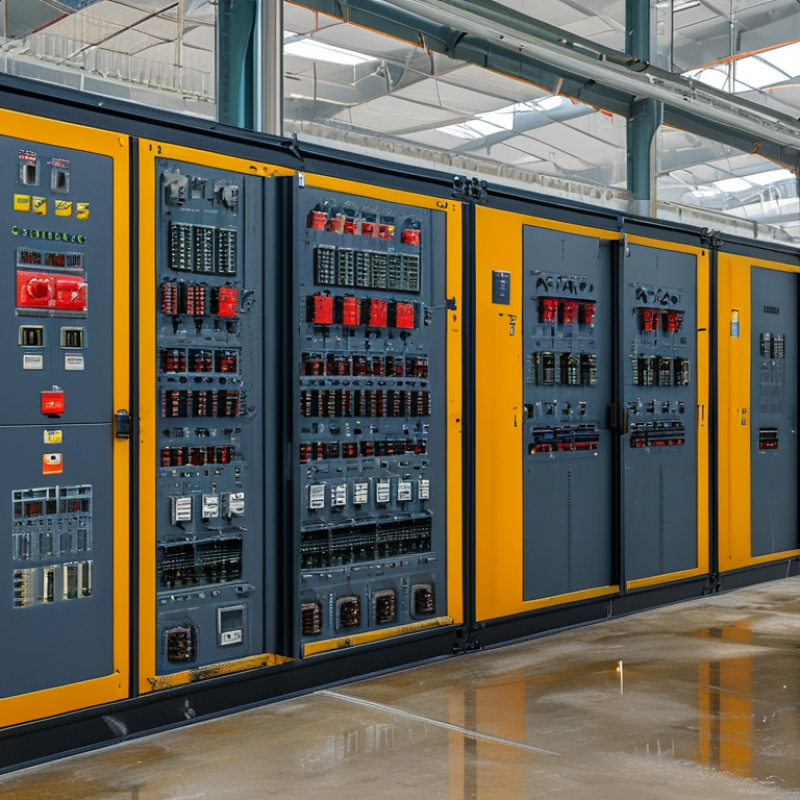
2026 Top Cable Distribution Box Manufacturers for Global Buyers?
A cable distribution box separates, protects, and redirects incoming cables to several outgoing circuits. It may contain terminal blocks, busbars, protective devices, or control connections. In practical installations, enclosure selection starts with location, cable size, heat, moisture, and maintenance access. A box beside a washdown area needs different protection from one installed inside a dry electrical room.
IEC 61439 matters when the box forms part of a low-voltage switchgear and controlgear assembly. The standard addresses design verification, temperature rise, insulation, short-circuit withstand, and protective circuit continuity. Buyers should request applicable test records, rated current data, and clear assembly documentation. A certificate alone may not prove that every customized configuration was verified. That distinction is easy to miss.
IP ratings describe enclosure protection, not complete installation safety. IP54 limits dust entry and resists water splashes. IP65 protects against dust and water jets. IP68 offers dust-tight protection and immersion under specified conditions. The exact test depth and duration still matter. Seal every entry. Proper cable glands, compression, earthing, spacing, and tightening torque prevent common failures. Field checks often find damaged seals or unused openings left unprotected. Not always. A higher IP rating cannot repair poor cable routing, condensation, overloaded terminals, or weak maintenance procedures. One practical improvement is photographing each cable entry before energizing the assembly. It creates useful evidence, although it cannot replace competent inspection.
| Evaluation Dimension | Technical Requirement or Rating | What It Means for Buyers | Verification Points | Typical Use Consideration |
|---|---|---|---|---|
| Product Function | A cable distribution box distributes, branches, terminates, or protects electrical circuits inside an enclosure. | The box should provide organized cable connections while reducing exposure to accidental contact, moisture, dust, and mechanical damage. | Confirm the number of incoming and outgoing circuits, conductor sizes, terminal arrangement, and available internal space. | Used in building services, industrial equipment, renewable-energy systems, infrastructure, and outdoor electrical installations. |
| IEC 61439 Applicability | IEC 61439 applies to low-voltage switchgear and controlgear assemblies when the distribution box is configured and verified as an assembly. | It addresses assembly design, construction, performance, and verification rather than serving as a general enclosure-only rating. | Request the applicable assembly standard, design-verification evidence, routine-verification records, rated voltage, rated current, and short-circuit withstand information. | Important for distribution assemblies with busbars, protective devices, switching equipment, or integrated control components. |
| Ingress Protection | : limited dust ingress and protection against water splashing from any direction. | Suitable for many sheltered indoor or semi-protected locations, but it is not dust-tight and is not intended for water jets or immersion. | Check that the complete installed enclosure, including cable glands, covers, seals, and unused entries, maintains the claimed rating. | Commonly considered for indoor industrial areas and protected service locations. |
| Ingress Protection | : limited dust ingress and protection against water jets from any direction. | Provides a higher level of water protection than IP54, but it is still not dust-tight or designed for immersion. | Verify the test basis, enclosure assembly configuration, gland selection, and sealing of cable entry points. | Suitable for exposed industrial areas where moderate water jets may occur. |
| Ingress Protection | : limited dust ingress and protection against powerful water jets. | Offers enhanced resistance to strong water streams while allowing limited dust ingress. | Confirm that doors, joints, hinges, drain components, and cable glands are included in the tested configuration. | Useful for demanding outdoor or washdown-prone environments when immersion is not expected. |
| Ingress Protection | : dust-tight and protected against water jets from any direction. | Provides complete protection against dust entry and resistance to water jets under specified test conditions. | Check gasket material, enclosure tolerances, cover compression, cable-gland rating, and maintenance instructions. | Frequently specified for dusty industrial sites, outdoor equipment, and general weather-exposed installations. |
| Ingress Protection | : dust-tight and protected against powerful water jets. | Provides stronger water-jet protection than IP65, but it does not automatically indicate protection against immersion. | Ensure the IP66 claim applies to the complete box with all accessories installed, not only to the empty enclosure. | Appropriate for harsh outdoor environments and applications exposed to heavy spray or powerful cleaning jets. |
| Ingress Protection | : dust-tight and protected against temporary immersion under the specified test conditions. | Normally indicates temporary immersion protection; it does not automatically guarantee protection against powerful water jets. | Review the stated immersion depth and duration, cover-locking method, cable-entry system, and installation orientation. | Considered where temporary flooding, pooling water, or accidental short-term submersion is possible. |
| Ingress Protection | : dust-tight and protected against continuous immersion under conditions specified by the enclosure manufacturer. | The depth, duration, and operating conditions must be defined by the manufacturer; IP68 is not a universal immersion value. | Obtain the exact immersion conditions, test report, sealing instructions, compatible glands, and limitations for repeated immersion. | Used for applications with sustained immersion risk, subject to a documented installation and test specification. |
| Rated Voltage | Low-voltage distribution assemblies generally operate within the scope of systems up to 1,000 V AC or 1,500 V DC, subject to the applicable standard and design. | The box must be suitable for the system voltage, insulation coordination, clearance, and creepage requirements. | Compare rated operational voltage, insulation voltage, overvoltage category, pollution degree, and local electrical rules. | Do not select an enclosure by voltage alone; internal devices and wiring must also be rated for the system. |
| Rated Current | The rated current is determined by the assembly design, conductor arrangement, terminals, protective devices, and thermal performance. | A larger enclosure does not automatically provide a higher current rating or better heat dissipation. | Check incoming current, outgoing circuit currents, diversity assumptions, conductor cross-section, terminal temperature rating, and derating data. | Essential for continuous-load applications, high-density wiring, and installations with limited ventilation. |
| Short-Circuit Performance | The assembly may require a declared short-circuit withstand or conditional short-circuit rating appropriate to the installation. | The enclosure, busbars, terminals, protective devices, and mounting system must withstand prospective fault conditions as specified. | Request the rated short-time withstand current, peak withstand current, conditional short-circuit rating, and protective-device coordination data where applicable. | Particularly important in commercial, industrial, utility, and high-fault-level electrical systems. |
| Material Selection | Common enclosure materials include polycarbonate, ABS, polyester, stainless steel, painted steel, and aluminum. | Material affects impact resistance, corrosion resistance, UV performance, weight, thermal behavior, and service life. | Check material grade, flammability information, UV resistance, chemical compatibility, corrosion protection, and impact rating. | Use corrosion-resistant or non-metallic solutions for coastal, chemical, humid, or outdoor environments when appropriate. |
| Cable Entry System | Cable glands, conduit hubs, grommets, blanking plugs, and compression seals must match the cable type and enclosure rating. | Poorly selected cable entries can reduce the IP rating, strain relief, EMC performance, and mechanical protection of the complete box. | Verify thread type, cable diameter range, sealing material, strain-relief capability, bonding requirements, and unused-entry closure. | Choose entries according to cable diameter, installation method, movement, vibration, and environmental exposure. |
| Earthing and Bonding | Metallic enclosures and exposed conductive parts may require protective bonding and a reliable protective-earth connection. | Correct bonding helps provide a low-impedance fault-current path and supports automatic disconnection under fault conditions. | Inspect earth terminals, bonding straps, paint-free contact areas, conductor sizing, continuity verification, and local code compliance. | Required whenever conductive parts could become accessible or energized during a fault. |
| Insulation and Touch Protection | Live parts should be protected against direct contact through suitable barriers, covers, insulation, or enclosure construction. | The design should minimize accidental contact during normal operation and specified maintenance activities. | Check internal barriers, terminal shrouds, finger-safe components, access control, warning labels, and required clearances. | Important in public areas, service corridors, industrial workplaces, and frequently maintained installations. |
| Temperature Rise | Heat generated by conductors and devices must remain within the limits of the selected components and assembly design. | High ambient temperature, tightly packed conductors, and sealed high-IP enclosures can increase internal temperature. | Review temperature-rise verification, ambient-temperature assumptions, ventilation provisions, load diversity, and conductor derating. | Critical for compact boxes, high-current circuits, solar installations, and installations in hot climates. |
| Mechanical Protection | Impact resistance, enclosure rigidity, mounting strength, door retention, and cable-support provisions should match the site conditions. | A box with good ingress protection may still be unsuitable if it cannot withstand impact, vibration, or cable pulling forces. | Check impact classification, mounting-hole strength, hinge and latch design, vibration suitability, and cable anchoring. | Important for construction sites, transport infrastructure, factories, and areas exposed to mechanical abuse. |
| Testing and Documentation | Relevant documentation may include datasheets, wiring diagrams, routine-verification records, IP test evidence, material data, and installation instructions. | Complete documentation helps buyers compare technically equivalent products and supports inspection, commissioning, and future maintenance. | Confirm document revision, test scope, product configuration, rated values, traceability, and consistency between the report and supplied unit. | Use documented evidence rather than marketing terminology when approving products for regulated projects. |
| Installation and Maintenance | Correct torque, conductor preparation, gasket installation, cable support, enclosure orientation, and periodic inspection are required. | Installation quality can determine whether the box achieves its intended electrical and IP performance. | Request torque values, cable-stripping guidance, gasket replacement instructions, inspection intervals, and spare-part information. | Allow adequate working space and ensure the enclosure remains accessible for safe isolation and maintenance. |
| Global Buyer Selection | Selection should consider applicable standards, local regulations, environmental conditions, supply continuity, customization, and technical support. | The lowest purchase price may not represent the lowest total cost if installation, certification, replacement, or maintenance risks are higher. | Compare total specification, lead time, minimum order quantity, configuration control, spare parts, warranty terms, and after-sales support. | Use a written technical checklist and require the same data format from every potential supplier. |
: It covers low-voltage cable distribution networks operating up to 1,000 volts. Demand is growing in cities, factories, renewable projects, and charging infrastructure.
Electricity use is rising as buildings, transport, and industrial equipment become more electrified. Rooftop solar and heat pumps also add local grid pressure. Small networks matter more now.
Common ratings range from 63 A to 630 A. A 63 A box may suit a small workshop. A 630 A unit may serve an industrial feeder. Check starting current, continuous load, temperature, and future expansion.
Powder-coated steel provides strong impact resistance. Polycarbonate or fiberglass may perform better in damp, corrosive areas. Inspect hinges, terminals, gland plates, and internal supports. Material choice depends on location.
It indicates resistance to dust and water under defined test conditions. An IP65 enclosure may resist dust and water jets. It does not automatically suit sunlight, drainage, or condensation. Installation details still matter.
Request routine-test records, temperature-rise evidence, and material certificates. Ask for short-circuit withstand data and assembly compliance documents. Certificate numbers should match the supplied product model. A certificate alone is not proof.
Ask for monthly output, current lead times, testing equipment, and batch-control records. Recent delivery evidence is more useful than optimistic promises. Also check spare terminals and replacement-part access. Capacity claims can change quickly.
Include conductors, breakers, glands, transport, installation, testing, and future maintenance. The enclosure price is only one part of the project cost. A cheap quote may exclude essential accessories. That mistake is understandable.
Confirm cable bending space, terminal access, labels, drainage, and inspection clearance. Poor bending space can make routine maintenance difficult. A loose gland may delay field installation. Small details matter.
This guide presents the 2026 global market for Cable Distribution Box solutions, focusing on low-voltage networks up to 1,000 V. It explains the basic function of these boxes, the role of IEC 61439 compliance, and how IP54 to IP68 protection levels support safe operation in indoor, outdoor, and demanding environments. It also reviews major purchasing factors, including current ratings from 63 A to 630 A, enclosure materials, thermal performance, installation flexibility, durability, and total cost.
For international buyers, the guide outlines how to evaluate manufacturers through production capacity, certification documentation, export experience, and regional service coverage. A practical checklist covers IEC compliance verification, factory audits, quality-control procedures, sample testing, lead-time planning, packaging, warranty terms, and after-sales support. By comparing technical specifications and supplier reliability together, buyers can select distribution boxes that provide safe, durable, and cost-effective performance for commercial, industrial, infrastructure, and renewable-energy applications.
