 Dehler
China’s solar manufacturing base is expanding with remarkable speed. The IEA’s Renewables 2024 report recorded about 420 GW of global solar PV additions in 2023. IEA PVPS reported cumulative global capacity above 1.6 TW. Behind every large installation, however, small electrical components carry major responsibilities.
A Solar Combiner Box gathers multiple photovoltaic string outputs before they reach an inverter. It may contain fuses, surge protection, monitoring devices, and isolation switches. These details affect safety, maintenance time, and long-term energy yield. PV code specialist Bill Brooks offers a practical warning: “The weakest connection can determine system reliability.” His point is easy to overlook. It should not be.
This guide examines China’s top 10 Solar Combiner Box manufacturers through a practical industry lens. The comparison considers product certification, enclosure protection, thermal design, component quality, customization, monitoring capability, export experience, and after-sales support. Data from IEA PVPS, Wood Mackenzie, and other market studies provide broader context for solar growth and supply-chain competition.
Still, no ranking is perfect. Manufacturer claims require careful verification. A factory tour, sample inspection, and warranty review can reveal more than a polished brochure. Look closely at cable glands, terminal spacing, sealing quality, and internal labeling. These small details matter in dusty fields and humid coastal projects. China offers scale and technical variety, but buyers must distinguish low price from dependable value. That judgment remains the central purpose of this overview.
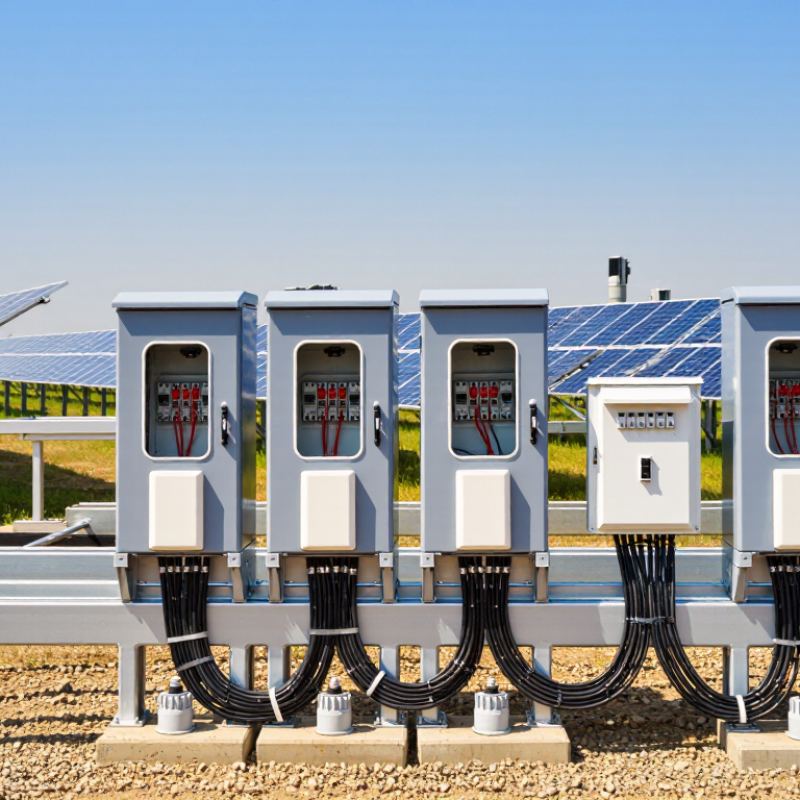
What Is a Solar Combiner Box?
A solar combiner box gathers output from several photovoltaic strings into one DC circuit. Each string sends electricity from its panels toward the inverter. Inside the enclosure, fuses or circuit breakers help protect individual strings from overcurrent. The box may also include surge protection, a DC isolator, and monitoring components.
In practical installations, cable organization matters as much as electrical capacity. Clearly labeled terminals reduce inspection time and wiring errors. A weather-resistant enclosure protects internal parts from rain, dust, and sunlight. The selected IP rating should match the installation environment. Hot rooftops need careful attention to internal temperature, because heat can shorten component life.
Small details matter.
During field checks, technicians often find loose terminals, incorrect fuse ratings, or poorly sealed cable entries. These issues can create unnecessary heating and unreliable operation. The combiner box should match the system voltage, current, grounding method, and expected fault conditions. It should also remain accessible for testing and maintenance. However, no enclosure can correct poor system design. Engineers must review string calculations, protection coordination, and local electrical requirements before installation. A cheaper box may appear suitable, yet weak components can increase long-term service risks. Regular inspections still matter, even when the box looks clean and undamaged.
A solar combiner box combines multiple photovoltaic string circuits into one or more output circuits before the electricity reaches an inverter. It commonly integrates string fuses, DC disconnects, surge protection devices, monitoring components, and an outdoor-rated enclosure.
| No. | Reference Configuration | PV String Inputs | Typical String Fuse Rating | Maximum DC Voltage | Typical Output Current | Surge Protection | Enclosure Rating | Typical Application |
|---|---|---|---|---|---|---|---|---|
| 1 | 4-in / 1-out | 4 strings | 15–20 A DC | 600 V DC | Up to 80 A | Type 2 DC SPD | IP65 | Small residential or small commercial PV arrays |
| 2 | 6-in / 1-out | 6 strings | 15–20 A DC | 600 V DC | Up to 100 A | Type 2 DC SPD | IP65 | Residential and small rooftop installations |
| 3 | 8-in / 1-out | 8 strings | 15–25 A DC | 1,000 V DC | Up to 125 A | Type 2 DC SPD | IP65 or IP66 | Commercial rooftop systems |
| 4 | 12-in / 1-out | 12 strings | 15–25 A DC | 1,000 V DC | Up to 160 A | Type 2 DC SPD | IP65 or IP66 | Medium-size commercial PV systems |
| 5 | 16-in / 1-out | 16 strings | 15–25 A DC | 1,000 V DC | Up to 200 A | Type 1+2 or Type 2 DC SPD | IP65 or IP66 | Large rooftop and distributed-generation projects |
| 6 | 20-in / 1-out | 20 strings | 20–32 A DC | 1,000 V DC | Up to 250 A | Type 1+2 or Type 2 DC SPD | IP66 | Industrial and large commercial PV plants |
| 7 | 24-in / 1-out | 24 strings | 20–32 A DC | 1,000 V DC | Up to 315 A | Type 1+2 or Type 2 DC SPD | IP66 | Large-scale ground-mounted solar installations |
| 8 | 12-in / 2-out | 12 strings | 15–25 A DC | 1,500 V DC | Up to 160 A per output | Type 2 DC SPD | IP65 or IP66 | Utility-scale systems using higher-voltage string designs |
| 9 | 16-in / 2-out | 16 strings | 20–32 A DC | 1,500 V DC | Up to 200 A per output | Type 1+2 or Type 2 DC SPD | IP66 | Utility-scale solar fields and central-inverter systems |
| 10 | 24-in / 2-out | 24 strings | 20–32 A DC | 1,500 V DC | Up to 315 A per output | Type 1+2 or Type 2 DC SPD | IP66 | High-capacity utility-scale photovoltaic plants |
Selection note: The values above are typical reference ranges rather than universal limits. Actual fuse ratings, conductor sizes, disconnect ratings, surge protection type, enclosure material, and current capacity must be selected according to module short-circuit current, system voltage, temperature correction, cable installation method, inverter requirements, applicable electrical codes, and site lightning conditions.
Ask for designs aligned with IEC 61439 and IEC 62548. Request test reports, not verbal promises. Certification alone is not enough.
Check IP65 or IP66 ratings for outdoor projects. Inspect cable glands, door seals, and drainage details. Small gaps invite moisture.
Request wiring diagrams, component specifications, test records, and serial-number lists. Compare the diagram with the delivered box. Differences need explanation.
Look for insulation, polarity, temperature-rise, and short-circuit tests. Thermal images after load testing can reveal hot terminals. Loose terminals are dangerous.
Inspect copper busbars, wiring space, labels, fuses, connectors, and surge protection devices. Crowded wiring slows maintenance. That weakness is easy to miss.
Yes, request samples from different production batches. Check torque control, crimping quality, labeling, and cable entry points. One sample proves little.
Not always. A lower price may mean fewer tests, thinner materials, or limited spare parts. I might initially trust efficiency too quickly.
Ask about warranty terms, response times, spare parts, and corrective-action reports. Review export experience and field feedback. Slow support becomes expensive.
This article provides a practical overview of the Solar Combiner Box, explaining its role in combining multiple photovoltaic string outputs, improving system organization, and supporting safer, more efficient power transmission. It also examines how to evaluate manufacturers in China by considering product quality, electrical performance, enclosure protection, safety certifications, customization capabilities, production capacity, testing procedures, delivery reliability, and after-sales service.
China has developed strong manufacturing capabilities in the solar sector, supported by mature supply chains, advanced production equipment, and extensive experience in photovoltaic applications. The article introduces the key qualities to look for when comparing the top ten Chinese manufacturers without focusing on any specific brand. Finally, it offers guidance for selecting the right supplier according to project size, technical requirements, environmental conditions, budget, communication efficiency, and long-term support, helping buyers make a more informed and reliable sourcing decision.
