 Dehler
Dehler
Dehler
China’s solar manufacturing base has become a major force in global photovoltaic equipment. Among its many products, the PV Array Box supports safer, cleaner, and more manageable DC collection.
A reliable box gathers current from multiple solar strings. It may include fuses, surge protection, disconnectors, monitoring devices, and weather-resistant enclosures. These parts must work together under heat, dust, humidity, and changing electrical loads. Small design weaknesses can create large maintenance problems.
As solar engineer and PV reliability specialist Li Wei observes, “A PV Array Box is only as reliable as its weakest connection.” This practical view matters when comparing China’s leading manufacturers. Factory scale alone does not prove product quality. Buyers should examine circuit design, component brands, enclosure protection, thermal performance, testing records, and after-sales support.
The top ten manufacturers in this guide are considered through those practical details. Their products may serve rooftop projects, utility-scale plants, commercial systems, and harsh outdoor environments. Some companies offer advanced monitoring, while others focus on simple, cost-effective protection.
Yet no ranking is perfect. Specifications can change between production batches. Certifications may cover different models. Installation quality also affects long-term performance. This is where many comparisons become too confident.
A careful buyer should request current datasheets, sample test reports, and clear warranty terms. Field experience deserves attention, too. A box that looks impressive on paper may perform differently beside a dusty inverter station.
This introduction opens a closer review of China’s top PV Array Box manufacturers, their engineering strengths, and the compromises behind their market reputation.
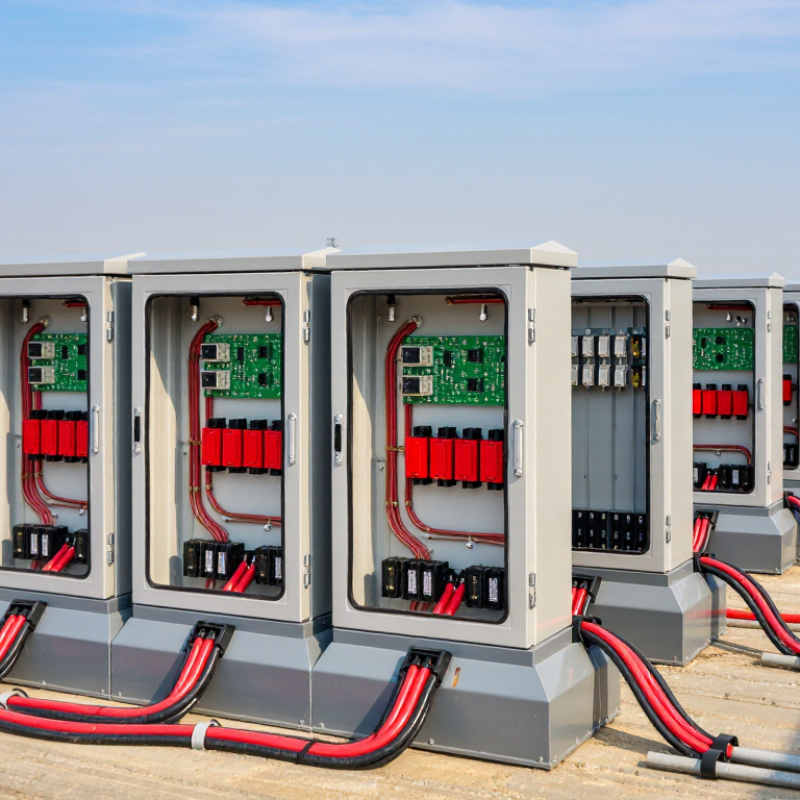
A PV array box, often called a DC combiner box, joins several solar-string outputs before they reach the inverter. It may contain string fuses, surge protection, isolation devices, and monitoring terminals. It is not just a box. It is a control point for current, heat, and fault protection.
The IEA PVPS Trends 2024 report recorded about 447 GW of new photovoltaic capacity worldwide in 2023. More strings and larger arrays increase the need for organized DC protection. IRENA’s Renewable Capacity Statistics 2024 reported 345.5 GW of solar capacity added during 2023. These figures show why reliable array protection matters at utility scale. A well-designed enclosure limits fault energy, simplifies testing, and helps technicians locate abnormal current. However, performance depends on correct fuse ratings, cable sizing, sealing, grounding, and temperature control. No design is perfect. Poor labeling can still delay maintenance.
Tips: Check the box’s maximum system voltage, short-circuit rating, IP protection level, and operating temperature range. Confirm compliance with applicable IEC requirements, including IEC 62548 for photovoltaic array design and IEC 61643 for surge protection. Leave practical cable space inside. Crowded terminals invite mistakes. Field experience also suggests checking torque marks and thermal images during commissioning. A report can look complete, yet one loose connection may remain unnoticed.
It combines outputs from several solar strings before they reach the inverter. It can hold fuses, surge protection, isolation devices, and monitoring terminals.
It organizes direct-current protection and helps technicians locate abnormal current. It also limits fault energy. Good design matters.
Check maximum system voltage, short-circuit rating, input current, and operating temperature. Also verify the enclosure’s IP protection level and cable capacity.
Common components include string fuses, surge protective devices, and isolators. The exact selection depends on the system design. More parts are not always better.
Compare voltage ratings, fuse ratings, surge protection, enclosure strength, and monitoring options. Request test reports for the exact model and configuration. A brochure is not enough.
Ask for datasheets, wiring diagrams, test records, and certification documents. Check that each document matches the delivered configuration. Small mismatches can cause trouble.
Confirm its temperature range, UV resistance, sealing quality, and material suitability. A sealed enclosure under direct sunlight may become surprisingly hot. Thermal testing helps.
Leave practical cable space and tighten terminals to the specified torque. Check labels, cable entries, grounding, and wiring paths. Crowded terminals invite mistakes.
Review torque marks, wiring labels, and protective-device positions. Thermal images may reveal a loose connection. They may also miss problems.
No. Compare sample units with production drawings and written inspection criteria. Independent inspection can expose weak sealing or unclear labels. I would still ask more questions.
This article provides a practical overview of the China Top 10 PV Array Box Manufacturers and explains why a reliable Pv Array Box is essential for modern solar power systems. It introduces the function of a PV array box, including string combining, circuit protection, isolation, monitoring, and system safety. The selection method focuses on manufacturing capability, product quality, technical innovation, certification, customization services, delivery reliability, and after-sales support.
It also presents a balanced comparison of leading manufacturers without emphasizing any specific brand, highlighting differences in product structures, protection levels, monitoring options, materials, and application scenarios. Finally, the article offers guidance for choosing the right Chinese supplier by considering system voltage, current capacity, environmental conditions, installation requirements, communication functions, compliance documentation, and long-term service capability. This summary helps solar developers, installers, and buyers make a more informed decision when sourcing a dependable Pv Array Box for residential, commercial, or utility-scale photovoltaic projects.
