
Dehler Dehler

What Are Surge Arresters and How Do They Work?

Time:2026-10-02 Author:Isabella
0%

Surge Arresters protect electrical systems from sudden voltage spikes caused by lightning, switching operations, or grid disturbances. These devices redirect dangerous transient energy toward ground before it reaches transformers, control panels, or sensitive electronics. The basic idea sounds simple. The engineering is not.

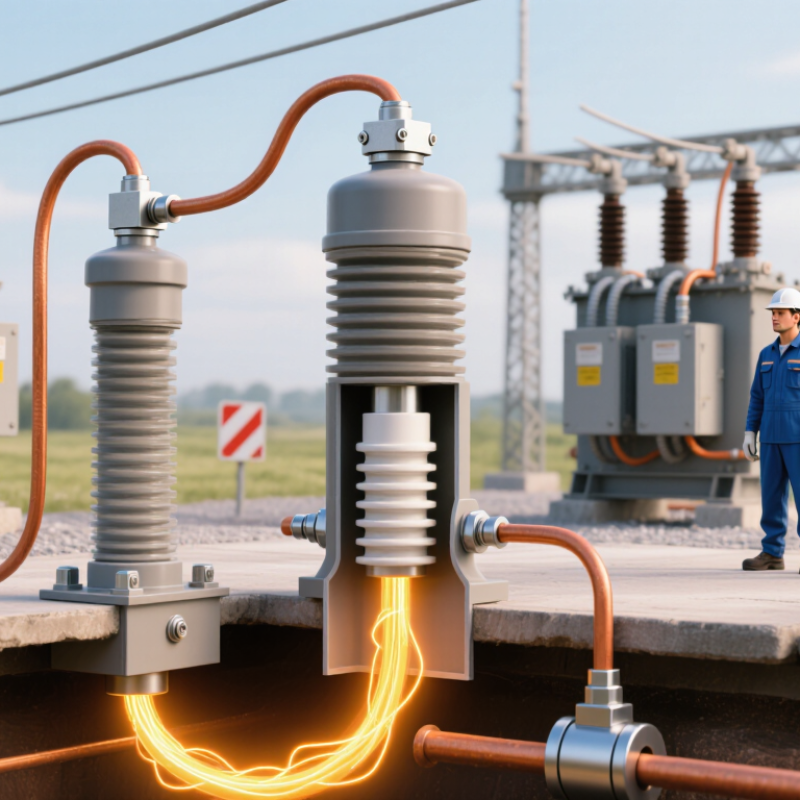
A typical metal-oxide Surge Arrester remains inactive during normal voltage conditions. When voltage rises sharply, its internal zinc-oxide elements become highly conductive. They provide a controlled path for excess current, then return to a high-resistance state. During inspections, technicians may check housing cracks, contamination, loose connections, and signs of overheating. A scorched terminal or damaged seal can reveal stress that is easy to overlook.

Understanding how these components work helps engineers choose suitable ratings, installation locations, and grounding arrangements. Correct coordination matters because an arrester must respond quickly without interrupting normal service. It also needs a short, low-impedance path to earth. Long or poorly routed conductors can reduce protection, even when the arrester itself is properly selected.

This guide explains the operating principle, main types, applications, and common failure signs of surge protection equipment. It also considers practical limits. No arrester can eliminate every electrical risk. That point deserves emphasis. Real protection depends on system design, maintenance, grounding quality, and verified manufacturer data. The discussion may simplify some technical details, but it aims to build a reliable foundation for safer decisions.
What Are Surge Arresters and How Do They Work?

What Is a Surge Arrester?

A surge arrester is a protective device installed between an electrical conductor and ground. Its purpose is to limit sudden overvoltage caused by lightning, switching operations, or faults. Under normal voltage, it behaves almost like an open circuit. During a surge, its resistance drops sharply and creates a safer path toward earth.

Most modern arresters use metal-oxide components with highly non-linear electrical behavior. They do not stop a surge from occurring. Instead, they reduce the voltage that reaches transformers, control panels, motors, and other sensitive equipment. The remaining voltage is called residual voltage, and its level depends on the arrester’s rating, wiring length, and grounding quality. Short connections matter.

Installation experience shows that grounding is often underestimated. A high-quality arrester cannot perform properly through a loose clamp, corroded conductor, or unnecessarily long cable. Technicians usually inspect conductor routes, insulation coordination, discharge capability, and the expected fault environment before selecting a device. Visual indicators may reveal thermal damage, but they do not replace electrical testing.

A simple explanation can mislead. Surge arresters are not unlimited shields, and severe events may damage them while protecting equipment downstream. Their service condition should be checked after major storms or unusual switching incidents. In some installations, protection at several electrical levels provides better coordination than one device alone. The exact arrangement still requires engineering judgment.

Why Surge Arresters Are Needed in Electrical Systems

Surge arresters protect electrical systems from brief, high-voltage spikes caused by lightning, switching operations, and utility faults. They connect between energized conductors and ground. During normal voltage, the arrester remains nearly inactive. When voltage rises sharply, its metal-oxide elements become conductive and redirect excess energy into the grounding network. The system then returns to normal operation within microseconds.

The need is substantial. NOAA climatology reports approximately 25 million lightning flashes across the United States each year. Even distant lightning can induce voltage on overhead lines, cables, and building wiring.

NERC’s State of Reliability reports consistently identify severe weather as a major contributor to bulk-power disturbances. A single surge can damage insulation, control boards, transformers, or sensitive measurement equipment. The visible failure may appear hours later, which makes diagnosis difficult.

Installation quality matters as much as the arrester rating. IEEE guidance emphasizes coordination between protective levels, equipment withstand ratings, and conductor lengths. Long grounding leads add inductance and can leave dangerous residual voltage at the load. IEC 60099-4 also stresses proper energy capability and system-voltage selection. Field inspections often reveal a practical weakness: an arrester is installed, but its ground path is corroded, loose, or too long. That protection is mostly theoretical. No arrester lasts forever. Repeated surges, contamination, and aging can reduce performance, so inspection records deserve more attention than many maintenance plans allow.

How Surge Arresters Divert Excess Voltage

What Are Surge Arresters and How Do They Work?

How Surge Arresters Divert Excess Voltage

A surge arrester protects electrical equipment from sudden overvoltage caused by lightning or switching events. It connects between a live conductor and ground, rather than carrying normal load current. Under ordinary voltage, its internal metal-oxide varistor remains highly resistant. Almost nothing flows through it.

When voltage rises sharply, the varistor changes behavior. Its resistance drops within microseconds, creating a safer path for excess electrical energy. The surge moves through the arrester and travels toward ground instead of forcing its way through insulation, control boards, or transformer windings. The device does not eliminate the surge. It limits the voltage to a safer level.

That distinction matters.

In field inspections, I look closely at the grounding conductor. A short, straight connection usually performs better than a long, coiled one because extra length increases impedance. Loose terminals, corrosion, or poor bonding can weaken the diversion path. The arrester may be correctly selected yet still provide disappointing protection.

Surge arresters also handle repeated events differently from one large event. Heat, moisture, and aging can reduce their protective margin. A damaged unit may show a visual indicator, leakage current, or physical cracking, but not always. Testing should follow the equipment manufacturer’s instructions and applicable electrical standards. The simple explanation is useful, but incomplete: protection depends on voltage rating, grounding, wiring layout, and coordination with other protective devices.

How Surge Arresters Divert Excess Voltage

This illustrative 8/20 μs lightning-surge profile shows how a surge arrester limits the voltage appearing across protected equipment. Without an arrester, the transient voltage can rise sharply. When the voltage exceeds the arrester’s operating threshold, the arrester conducts surge current to ground and clamps the voltage to a much lower level. Actual clamping voltage depends on the arrester design, surge current, system voltage, and installation conditions.

Key Components and Operating Principles

What Are Surge Arresters and How Do They Work?

A surge arrester is a pressure valve for electrical energy. It normally behaves like an insulator, then conducts briefly when voltage rises sharply. The core component is a metal-oxide varistor, usually built from zinc-oxide ceramic blocks. These blocks contain microscopic grain boundaries that change resistance with voltage. Under normal system voltage, only a tiny leakage current flows. During a lightning impulse or switching surge, resistance collapses within microseconds, diverting current into the grounding system.

The operating path is simple but unforgiving: line terminal, varistor stack, sealing system, and earth connection. IEC 60099-4 specifies the 8/20 microsecond impulse current for key performance tests, reflecting the fast profile of many surge events. CIGRE Technical Brochure 549 also emphasizes energy absorption, thermal stability, and ageing assessment in metal-oxide arresters. A poorly bonded ground can leave dangerous residual voltage at the equipment. The arrester may work, yet the installation still fails.

Field inspection adds practical evidence. Look for cracked housings, corrosion around terminals, moisture marks, and loose earth conductors. A leakage-current trend can reveal degradation before visible damage appears. Yet this measurement is not perfect; temperature and harmonics can distort readings. Selection also requires system voltage, temporary overvoltage duration, discharge class, and coordination with insulation levels. A higher rating is not automatically safer. During design reviews, I would question any arrester specification that ignores cable length, grounding impedance, or repeated switching surges.

Common Types and Applications of Surge Arresters

Surge arresters protect electrical systems from short, high-voltage transients caused by lightning, switching, or grid faults. Their core function is simple: they divert excess energy to ground before insulation fails. Metal-oxide arresters are widely used because their resistance falls sharply during a surge, then returns to a high value during normal voltage. IEC 60099-4 covers high-voltage metal-oxide arresters, while IEEE C62.11 addresses their testing and application.

Common types serve different voltage levels and environments. Distribution-class arresters are installed near transformers, overhead lines, and pole-mounted equipment. Station-class units handle higher energy at substations and industrial facilities. Low-voltage surge protective devices are used in control panels, buildings, and data rooms. Signal-line protectors defend communication circuits, although their capacitance must match the system. The choice depends on continuous operating voltage, discharge current, grounding design, and expected temporary overvoltage.

Location matters greatly. An arrester installed several meters from sensitive equipment may leave damaging residual voltage on the final cable section. Short, straight grounding conductors usually perform better. NOAA records roughly 25 million lightning flashes across the United States each year, showing why outdoor networks need layered protection. Still, an arrester is not a magic shield. Poor earthing, aging seals, or an incorrect voltage rating can quietly defeat it. Field inspections should check leakage current, thermal damage, and connection tightness. In practice, the neatest design is not always the safest; installation conditions often expose assumptions that laboratory tests cannot.

FAQS

What is a surge arrester?

It protects electrical equipment from sudden overvoltage caused by lightning or switching events. It is not a normal load-current device. Under ordinary voltage, it behaves almost like an insulator.

How does a surge arrester divert excess voltage?

Its metal-oxide varistor changes resistance within microseconds. High resistance becomes low resistance during a surge. Excess energy then travels through the grounding path.

Does a surge arrester eliminate a surge completely?

No. It limits the surge to a safer voltage level. Some residual voltage remains. That detail is easy to overlook.

Why does grounding length matter?

A short, straight grounding conductor usually performs better than a long, coiled one. Extra length increases impedance. The surge may then leave dangerous voltage near the equipment.

Where are surge arresters commonly installed?

They are used near transformers, overhead lines, substations, control panels, and data rooms. Signal circuits may need separate protectors. Each application requires a suitable electrical rating.

What signs may indicate arrester damage?

Inspect for cracked housings, corrosion, moisture marks, loose terminals, or heat damage. Some units show visual indicators. Others fail quietly, without obvious external damage.

Can repeated surges weaken a surge arrester?

Yes. Repeated events can reduce its protective margin. Heat, moisture, and ageing may accelerate degradation. A single inspection may not reveal everything.

How should a surge arrester be selected?

Consider continuous operating voltage, temporary overvoltage, discharge current, grounding, and insulation levels. Cable length also matters. A higher rating is not automatically safer.

Is leakage-current testing always reliable?

No. Leakage-current trends can reveal ageing before visible damage appears. However, temperature and harmonics may distort readings. Testing should follow qualified procedures and equipment instructions.

Can one surge arrester protect an entire electrical system?

Not always. Protection depends on location, wiring layout, grounding, and coordination with other devices. An arrester several meters away may leave the final cable exposed. The tidy design may still contain a weak assumption.

Conclusion

Surge Arresters are protective devices designed to limit sudden overvoltage in electrical systems. They help protect transformers, cables, switchgear, motors, and other sensitive equipment from voltage surges caused by lightning, switching operations, or unexpected faults. Under normal operating conditions, a surge arrester remains highly resistant and allows regular system voltage to pass without significant current flow. When a dangerous voltage spike occurs, its electrical resistance drops rapidly, creating a controlled path that diverts excess energy safely toward the grounding system.

The main operating element is typically a nonlinear voltage-limiting component, supported by insulation, housing, terminals, and grounding connections. Surge Arresters can be installed in power distribution networks, industrial facilities, renewable energy systems, communication infrastructure, and residential electrical panels. Common designs vary according to voltage level, installation location, environmental conditions, and the amount of surge energy they must handle. By responding quickly and returning to a high-resistance state after the surge passes, they reduce equipment damage, improve system reliability, and help maintain continuous electrical operation.

Isabella

Isabella

Isabella is a dedicated marketing professional with a sharp focus on driving brand growth and engagement through strategic content creation. With an extensive background in digital marketing, she combines her passion for storytelling with her keen understanding of industry trends to deliver......