Dehler
Selecting the right Ring Main Unit is no longer a routine equipment decision. It affects network safety, service continuity, maintenance access, and long-term operating cost. The International Energy Agency reports that global electricity demand will grow strongly through 2026, increasing pressure on distribution networks. Its Electricity Grids and Secure Energy Transitions report also estimates that annual grid investment must rise beyond USD 600 billion by 2030. More connections will require better decisions at medium-voltage level.
The correct unit depends on the project, not only the catalog. Engineers should verify rated voltage, short-circuit withstand, load current, protection coordination, enclosure rating, altitude, humidity, and cable arrangement. A 12 kV coastal substation may need different corrosion protection from a 24 kV industrial plant at high altitude. IEC 62271-200 provides a recognized framework for medium-voltage switchgear, including internal arc classification and enclosure performance. The IEA’s World Energy Outlook 2024 further highlights the importance of resilient infrastructure as electrification expands across regions.
Small details matter. A weak interface can delay commissioning. A poorly chosen protection relay can interrupt healthy feeders. Gas-insulated designs may save space, but environmental requirements and service procedures deserve careful review. Air-insulated alternatives may simplify maintenance, yet require more room. No selection matrix is perfect. Project teams must question optimistic assumptions, especially when local standards, spare-part access, and operator training differ. This guide examines practical selection criteria for global projects, combining technical compliance with field experience, documented performance, and realistic lifecycle planning.
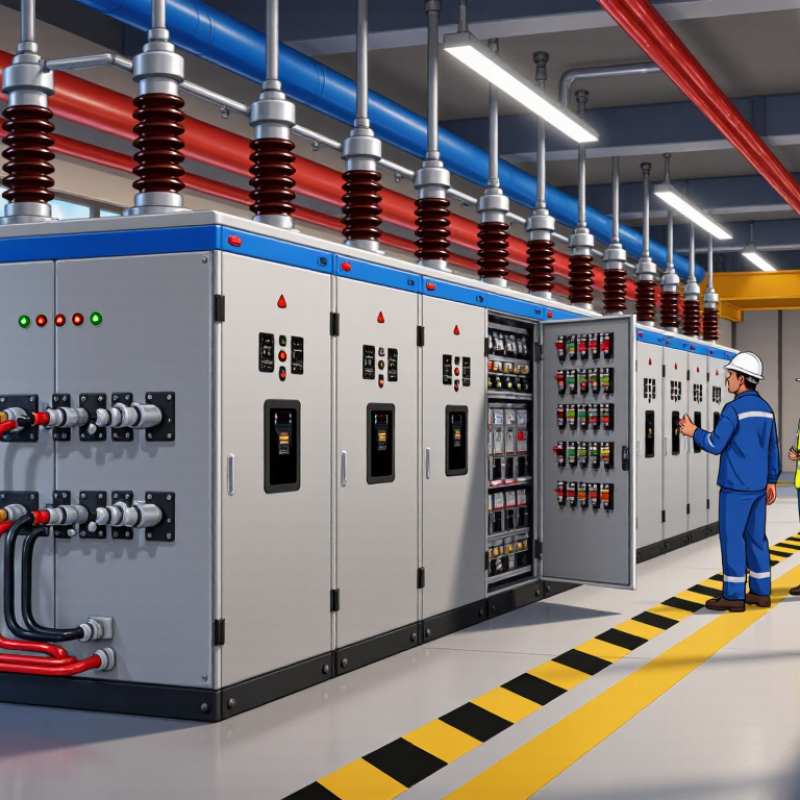
Choosing the right ring main unit for a global project starts with electrical inputs, not enclosure color or accessory lists.
Confirm nominal voltage between 12 and 36 kV. This range changes insulation clearances, testing, and cable termination space.
Specify frequency clearly: 50 or 60 Hz. A 50 Hz network should not be treated as a 60 Hz system by default. Small differences matter.
In field reviews, unclear data sheets often create expensive redesigns.
Fault duty needs closer attention.
Select equipment for the calculated short-circuit current, commonly 16–25 kA, at the installation point. Ask whether the rating is symmetrical RMS current, peak withstand, or both.
Also verify the short-time duration, such as one or three seconds.
Protection settings, transformer impedance, and utility studies should support the selected value. A high rating is not automatically safer. It can increase size, cost, and operating effort.
Check it.
Global projects add site conditions.
Record altitude, ambient temperature, humidity, pollution, seismic risk, and earthing method. These details influence insulation coordination and enclosure selection.
For example, a coastal site may need stronger corrosion protection than an inland substation. Use applicable IEC or local standards, then request routine and type-test evidence from the manufacturer.
Keep revision-controlled calculations and signed interface data.
One honest weakness remains: early utility information may be incomplete.
Mark assumptions visibly, review them with the grid operator, and avoid freezing the RMU design too soon. A neat spreadsheet can still mislead.
Choosing a ring main unit for a global project requires more than checking voltage and current ratings. IEC 62271-200 compliance should be supported by test reports, not only catalog statements. Review the tested assembly, rated short-time withstand current, and service continuity category. A certificate may cover one configuration, while your project requires another.
Internal-arc classification deserves close attention. Check whether the unit is rated AFL, AFLR, or another applicable class. These markings describe protection from specific sides, including front, lateral, and rear access areas. Confirm the test duration, fault current, enclosure arrangement, and installation clearance. A higher classification is not automatically suitable. The site layout still matters.
IP ratings protect against dust and water, but they do not replace sound installation practice. IP2X may address access to hazardous live parts, while higher ratings may suit outdoor exposure or humid rooms. Verify doors, cable compartments, ventilation paths, and operating mechanisms separately. I have seen projects accept an enclosure rating without checking cable entry points. That was an expensive oversight.
Ask for drawings, routine test records, type-test evidence, and environmental assumptions. Confirm whether the documentation matches the final production configuration. Standards and local grid rules may differ. A careful review can still miss an unusual maintenance condition. Challenge the checklist when the site reality feels different.
Choosing the right ring main unit for a global project starts with insulation, not appearance. SF₆ offers compact equipment and strong dielectric performance. However, its global warming potential exceeds 20,000 times that of carbon dioxide. Small leakage during filling, servicing, or disposal can create a serious environmental burden.
Air-insulated units avoid fluorinated gas and simplify end-of-life handling. They may require more space, careful insulation coordination, and protection against dust, moisture, and altitude effects. Solid-insulated designs can provide compact layouts without SF₆. Their long-term performance depends on materials, manufacturing quality, thermal design, and repair procedures. The lowest environmental impact on paper is not always the safest field choice.
Project engineers should compare the complete lifecycle. Review rated voltage, short-circuit withstand, switching frequency, enclosure protection, temperature range, and local grid requirements. Ask for independent test certificates and clear service instructions. Check whether trained technicians and replacement parts are available near the installation site. That detail matters.
Do not trust one simple comparison. A coastal substation, an underground station, and a high-altitude solar plant face different risks. I have seen specifications focus heavily on footprint while overlooking humidity control and maintenance access. That is a costly blind spot. Air or solid insulation may reduce climate impact, but only when the equipment remains reliable for decades. Designers should record expected leakage, material recovery, inspection intervals, and disposal responsibilities before approving the final configuration.
A reliable ring main unit starts with a realistic site survey, not a catalog search. At −25°C, confirm the equipment’s minimum service temperature, switching performance, and control-circuit limits. Cold can stiffen mechanisms and reduce battery capacity. Specify low-temperature lubricants, anti-condensation heaters, and suitable cable seals where necessary. Test the complete operating sequence after overnight exposure. This detail is often missed.
Altitude also affects insulation coordination and heat dissipation. Above the manufacturer’s reference elevation, request corrected clearance, withstand, and current values. Do not assume standard ratings remain unchanged. Record the actual installation height, enclosure position, and ventilation conditions. A compact indoor room may become warmer than expected during continuous loading.
Humidity creates another quiet risk. Morning condensation can appear on metal surfaces, terminals, and interlocking parts, even when average humidity seems acceptable. Select an enclosure with suitable ingress protection, heaters, drainage, and breathable pressure control. Coastal or industrial locations require stronger corrosion protection, including compatible coatings, sealed fasteners, and protected cable entries. Ask for salt-spray or coating test evidence, not only general claims. Review the inspection plan and maintenance intervals with local technicians. Their experience may reveal dust, salt, or flooding patterns that drawings cannot show. I have learned that checklists can still miss seasonal changes. Keep a small margin in thermal and environmental calculations. Overconfidence is expensive.
Choosing the right Ring Main Unit for a global project requires more than comparing purchase prices. The IEA’s Electricity Grids and Secure Energy Transitions report (2023) estimates that over 80 million kilometres of grids must be added or replaced by 2040. That pressure makes long-term equipment support a commercial issue, not only an engineering concern.
Assess a realistic 20–30-year service period. Check enclosure corrosion protection, insulation performance, operating-cycle ratings, and compatibility with IEC 62271 requirements. Ask for documented maintenance intervals, failure data, and condition-monitoring options. Small details matter. Can technicians access cable compartments safely? Are test points clearly marked? Are spare mechanisms available after ten years?
Spare parts planning should cover auxiliary contacts, fuses, motors, relays, seals, and operating handles. CIGRE asset-management guidance repeatedly stresses condition assessment, documented history, and risk-based maintenance. Request evidence from comparable climates, including coastal humidity, dust, freezing temperatures, and high solar exposure. The IEA also projects grid investment needs above USD 600 billion annually by 2030, increasing pressure to reduce outage duration and replacement delays.
Support capability deserves equal scrutiny. Review training, remote troubleshooting, local inventory, response times, and end-of-life procedures. A low-cost unit can become expensive when one unavailable component delays commissioning. However, a large spare-parts list is not automatically better. It may hide poor standardisation. Lifecycle calculations should include energy losses, inspections, logistics, downtime, and disposal costs. The uncomfortable question remains: are the promised service years based on tested evidence, or simply optimistic wording?
Confirm a nominal voltage between 12 and 36 kV. State whether the network operates at 50 or 60 Hz. Also record the calculated fault current at the installation point.
Common values range from 16 to 25 kA. Confirm whether the rating means symmetrical RMS current, peak withstand, or both. Specify the short-time duration, often one or three seconds.
Not necessarily. A higher rating may increase equipment size, cost, and operating effort. Match the rating with protection studies, transformer impedance, and utility calculations.
Record altitude, ambient temperature, humidity, pollution, seismic risk, and earthing method. A coastal site may need stronger corrosion protection than an inland substation.
Request test reports, routine test records, and drawings for the final configuration. A catalog statement alone is not enough. One certificate may cover a different assembly.
Confirm the applicable class, such as AFL or AFLR. Check the tested fault current, duration, enclosure arrangement, and access sides. Front protection may not cover rear maintenance areas.
IP ratings address protection against dust and water. Check doors, cable compartments, ventilation paths, and operating mechanisms separately. IP2X does not solve every outdoor exposure problem.
Cable entry points can weaken the practical protection of an enclosure. Inspect seals, clearances, and termination space. A neat enclosure rating can still hide a costly gap.
Mark assumptions clearly and review them with the grid operator. Keep calculations and interface data under revision control. Do not freeze the design too early.
No. Site maintenance access, unusual humidity, or actual cable routing may challenge the checklist. A tidy spreadsheet can still mislead. Recheck what seems obvious.
Choosing the right Ring Main Unit for global projects requires a structured assessment of electrical, environmental, and lifecycle requirements. Start by confirming the system voltage, typically between 12 and 36 kV, the operating frequency of 50 or 60 Hz, and the required short-circuit withstand or fault duty, commonly 16–25 kA. The unit should comply with IEC 62271-200 and provide a suitable internal-arc classification and IP protection rating for the installation environment.
Insulation technology also deserves careful consideration. SF₆ insulation offers compact design, but SF₆ has a global warming potential above 20,000, making air or solid insulation attractive where environmental impact is a priority. Site conditions such as temperatures down to −25°C, altitude, humidity, dust, and corrosive atmospheres may affect performance and enclosure selection. Finally, evaluate total lifecycle value over a 20–30-year service period, including maintenance needs, spare-parts availability, technical support, reliability, and end-of-life considerations.
