 Dehler
Dehler
Dehler
When it comes to power systems, the importance of a reliable Transformer Arrester cannot be overstated. These devices protect high-voltage transformers from surges. A well-chosen arrester can significantly enhance the longevity and reliability of power infrastructure.
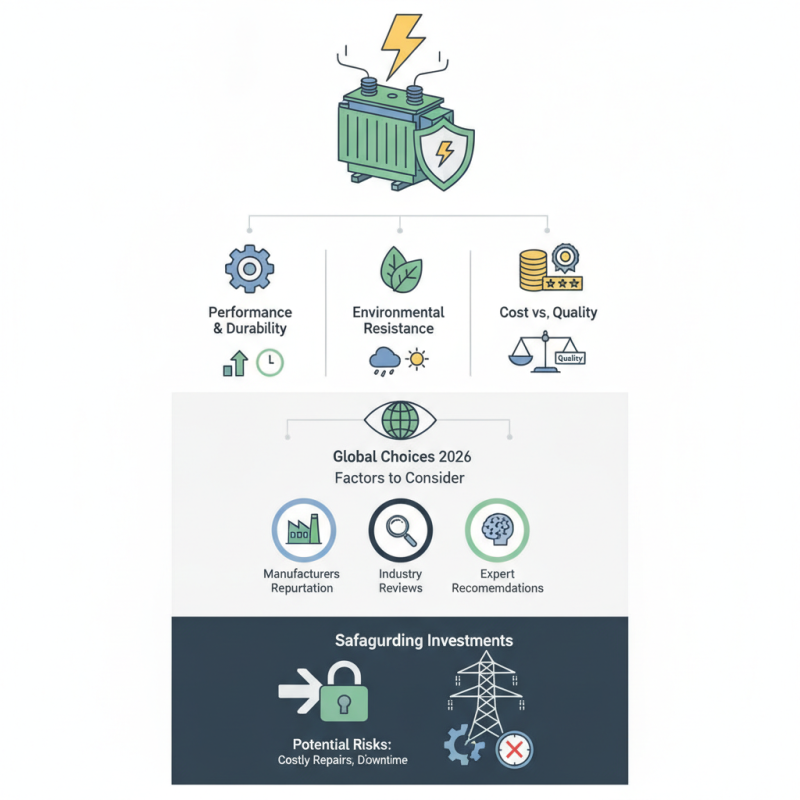
Global buyers face many choices in 2026. Selecting the best Transformer Arrester requires consideration of various factors. Performance, durability, and environmental resistance are key attributes. Buyers should weigh cost against quality. Often, cheaper options may lead to unforeseen issues.
Reliable guidance is crucial in this complex landscape. Manufacturers’ reputations impact decision-making. Consulting industry reviews and expert recommendations aids in making an informed choice. It is essential to evaluate both technical specifications and real-world performance. Ultimately, the right Transformer Arrester can safeguard investments in power systems. The potential risks of poor choices can lead to costly repairs and operational downtime.
Transformer arresters play a critical role in safeguarding electrical infrastructure. These devices protect transformers from voltage surges caused by lightning strikes or switching operations. According to a report from the International Electrotechnical Commission, transformer failures can lead to significant economic losses, with maintenance costs exceeding $1 million per incident.
Understanding the components of transformer arresters is essential. A high-quality arrester consists of non-linear resistors, surge absorbers, and insulation housings. Each component must meet strict industry standards to ensure reliability. For example, the IEEE Std 1313 provides guidelines for testing and evaluating these devices. Adhering to these standards helps mitigate risks associated with overvoltages, which can reach up to 3,000 volts.
Despite advancements, not all transformer arresters perform equally. Variability in manufacturing processes can affect long-term reliability. An independent study found that up to 15% of tested arresters failed during high-stress conditions. This raises concerns about compliance with safety protocols. Regular inspections and adherence to best practices are necessary for maintaining optimal performance. Investing in consistent quality checks is essential to reduce failure rates.
| Type | Voltage Rating (kV) | Energy Discharge Capability (kJ) | Response Time (µs) | Weight (kg) | Dimensions (mm) | Material |
|---|---|---|---|---|---|---|
| ZnO Surge Arrester | 36 | 25 | 100 | 5 | 280 x 120 x 80 | Zinc Oxide |
| Metal Oxide Varistor | 24 | 20 | 50 | 7 | 300 x 100 x 60 | Ceramic |
| Gapped Lightning Arrester | 15 | 15 | 200 | 6 | 250 x 90 x 50 | Silicone Rubber |
| Polymer Lightning Arrester | 20 | 18 | 75 | 4 | 290 x 110 x 70 | Polymeric |
: Transformer arresters protect electrical infrastructure from voltage surges caused by lightning and switching operations.
Preventing transformer failures can save significant costs, as maintenance can exceed $1 million per incident.
They consist of non-linear resistors, surge absorbers, and insulation housings, all meeting industry standards.
Transformer arresters are designed to manage overvoltages up to 3,000 volts to protect equipment.
Manufacturing variability can lead to a failure rate of up to 15% under high-stress conditions.
Voltage rating, energy absorption capacity, and low residual voltage are critical for optimal performance.
Incorrect installation can decrease the lifespan of arresters by 30%, compromising their effectiveness.
Regular inspections, cleaning connections, and checking grounding systems can help maintain performance.
It helps identify patterns and improves future maintenance schedules, potentially preventing costly failures.
Neglecting maintenance can lead to undetected issues, resulting in expensive repairs and system failures.
The article "2026 Best Transformer Arrester for Global Buyers Guide" provides a comprehensive overview of transformer arresters, essential devices designed to protect electrical systems from voltage spikes. It discusses the critical features buyers should consider when selecting transformer arresters, such as voltage rating, energy absorption capacity, and environmental resilience.
Furthermore, the article highlights emerging global market trends and projections for transformer arresters in 2026, offering insights into anticipated demands and technological advancements. It also includes practical tips on the installation and maintenance of transformer arresters, ensuring optimal performance and longevity. This guide aims to equip potential buyers with valuable knowledge to make informed decisions in the evolving landscape of transformer arrester technology.
